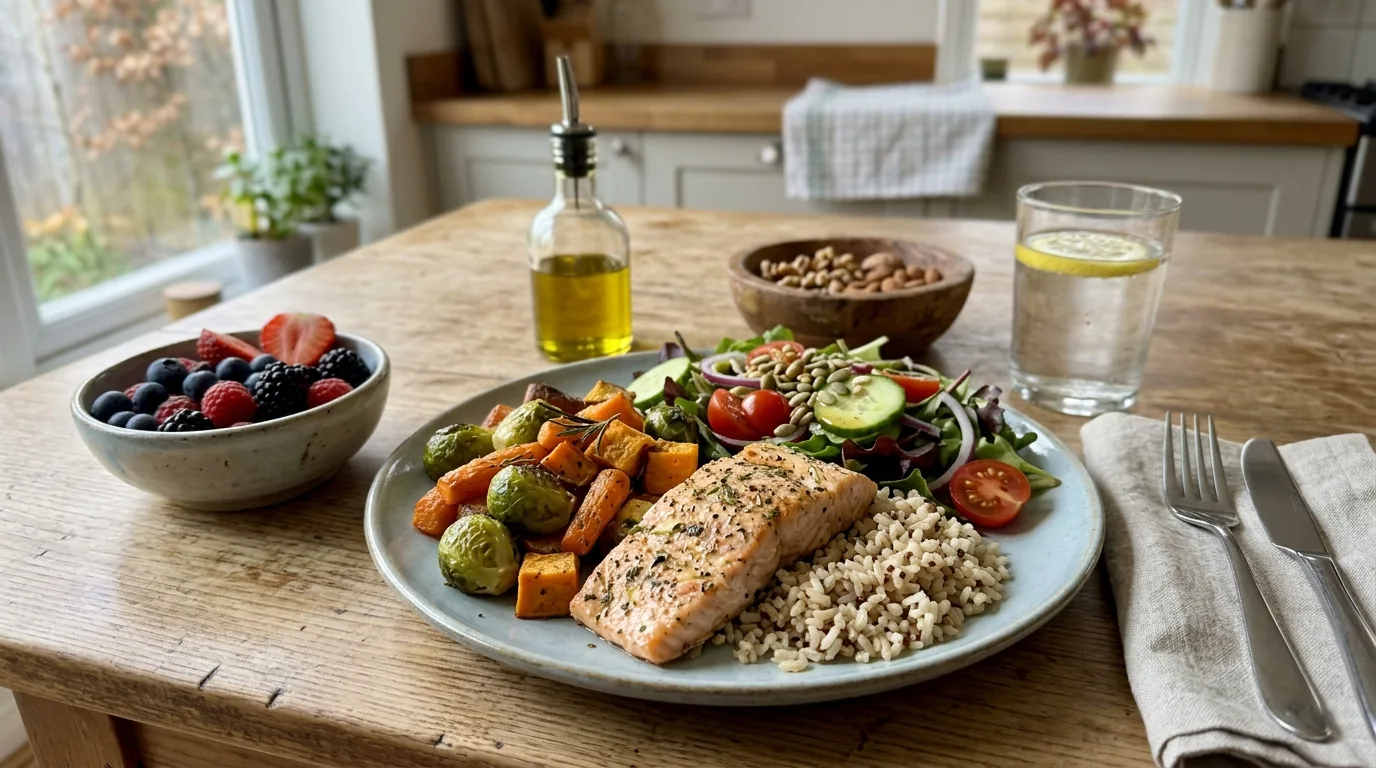
Vitamin D Food Sources: How to Get More in Your Everyday Meals
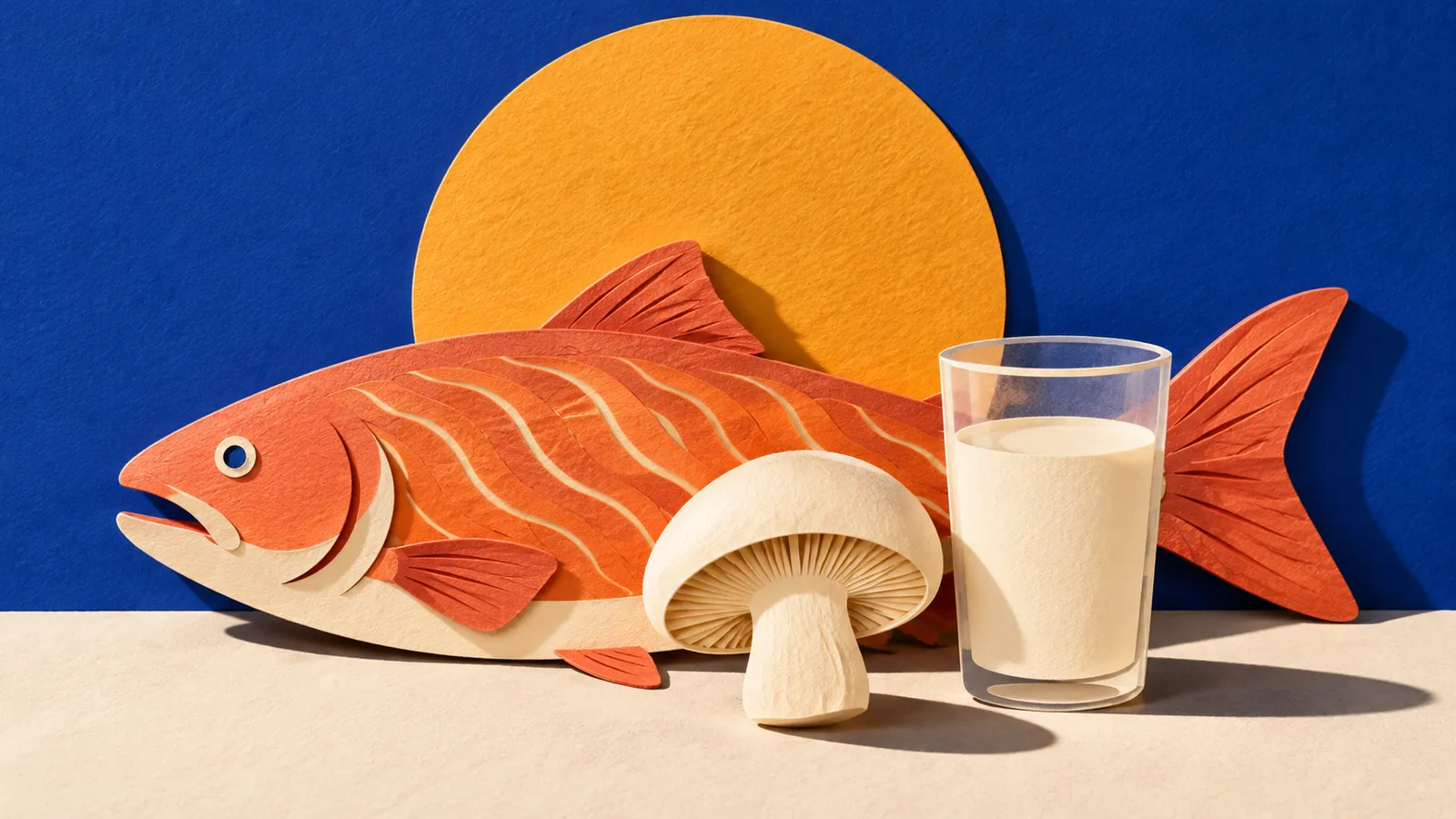
Vitamin D helps your body absorb calcium and supports healthy bones. Yet it is naturally present in relatively few foods, which can make it hard to work out where to find it and whether food alone is enough.
Fatty fish, fortified milk and plant drinks, some fortified cereals, egg yolks and UV-exposed mushrooms can all contribute vitamin D. The amount varies by food and brand. Depending on your diet, age, health and where you live, a supplement may also be useful. There is no need to turn every meal into a calculation: start by noticing the sources you already enjoy.
In this article
- Why vitamin D matters
- Foods that provide vitamin D
- How much adults need
- Reading a label
- Simple meal ideas
- Supplements and blood tests
- Frequently asked questions
Why does vitamin D matter?
Vitamin D helps the body absorb calcium, a mineral needed for strong bones. Muscles, nerves and the immune system also need it to function. A prolonged deficiency can affect bone health; in adults, severe deficiency can lead to osteomalacia, which softens bones. Having these roles does not mean that extra vitamin D will prevent every illness or give an otherwise healthy person an immune “boost.”
The body can make vitamin D when skin is exposed to sunlight. Food and supplements are other sources. How much vitamin D someone makes in sunlight varies with factors including season, location, skin pigmentation and clothing. UV exposure also raises the risk of skin cancer. Protect your skin with shade, clothing and a broad-spectrum sunscreen with SPF 30 or higher; avoid tanning beds. CDC sun safety NIH Office of Dietary Supplements
Foods that provide vitamin D
On a narrow screen, scroll the table sideways to see all columns.
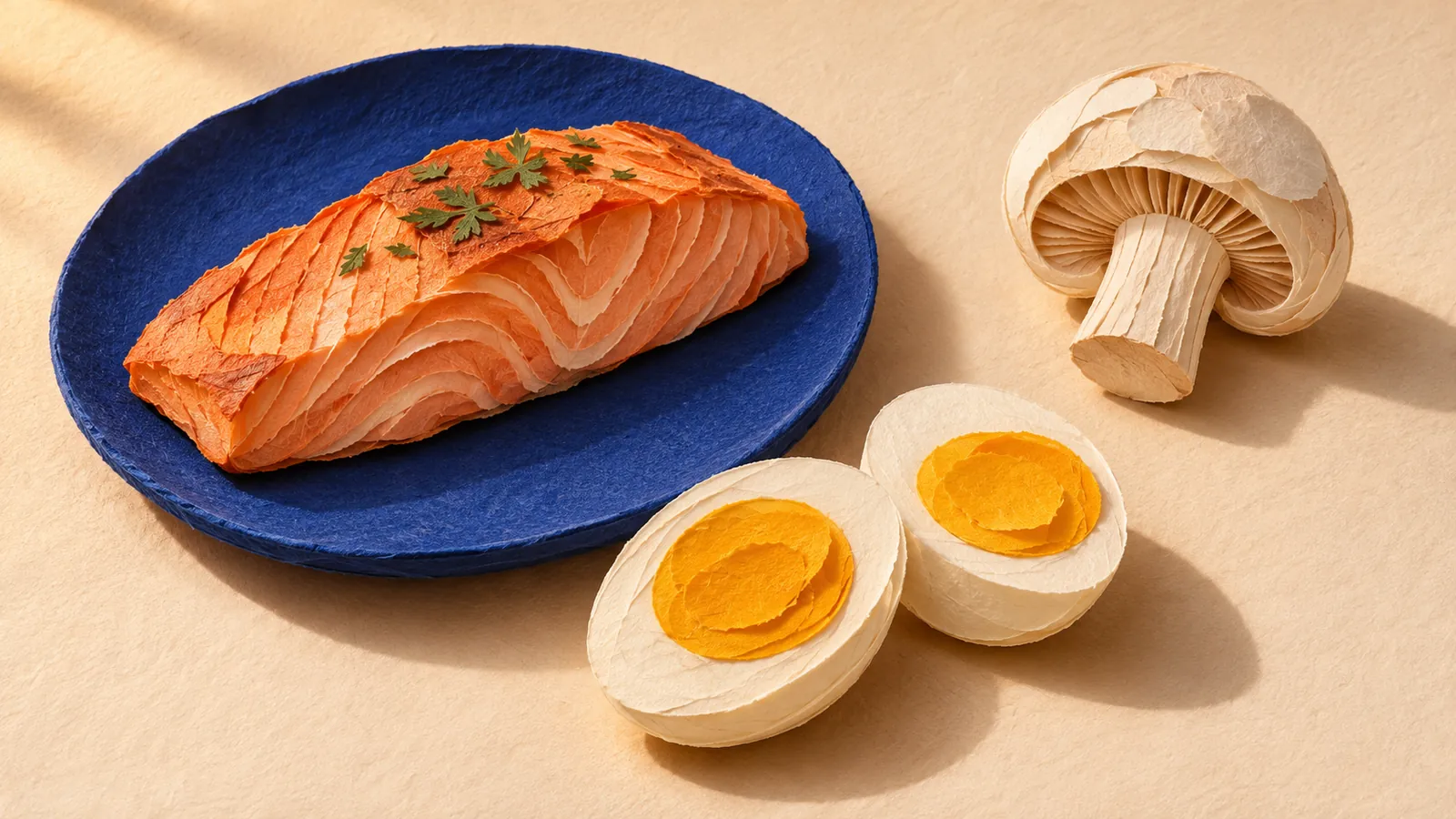
The amounts below are examples from the NIH Office of Dietary Supplements, not guarantees for every product. Fish species, preparation, fortification and brand affect the amount; check the label when available. The % Daily Value (%DV) uses the US labeling reference of 20 mcg per day for adults and children aged four and older.
| Food and serving | Vitamin D | US %DV | Easy way to use it |
|---|---|---|---|
| Farmed rainbow trout, cooked, 3 oz (85 g) | 16.2 mcg (645 IU) | 81% | Add to a grain bowl with vegetables. |
| Sockeye salmon, cooked, 3 oz (85 g) | 14.2 mcg (570 IU) | 71% | Serve with potatoes and a salad. |
| White mushrooms, UV-exposed, raw, sliced, ½ cup | 9.2 mcg (366 IU) | 46% | Add to a meal; the listed figure is for raw mushrooms, not a promise for cooked portions. |
| 2% milk, fortified, 1 cup (about 240 mL) | 2.9 mcg (120 IU) | 15% | Stir into oatmeal or serve with cereal. |
| Fortified soy, almond or oat drink, 1 cup (about 240 mL) | 2.5–3.6 mcg (100–144 IU) | 13–18% | Use in porridge; compare the product's label. |
| One large scrambled egg | 1.1 mcg (44 IU) | 6% | Add to toast or a vegetable frittata. |
| Canned light tuna, drained, 3 oz (85 g) | 1.0 mcg (40 IU) | 5% | Mix into a sandwich or salad. |
NIH's values are rounded and describe the specific foods and portions above. Their IU and %DV figures may not match a calculation from the rounded micrograms exactly. Other foods, including sardines and some fortified cereals, can contribute too. Add up the sources you usually eat over a day, along with any supplement, rather than treating one food as a complete solution. Salmon or trout and some fortified products can provide more per serving than an egg; other fish can provide less.
What about plant-based diets?
Fortified plant drinks and cereals can be useful, as can mushrooms labeled as UV-exposed. Not all plant drinks are fortified, and a fortified product may provide different amounts from one country or brand to another. Compare labels rather than assuming that every oat or soy drink contains vitamin D.
If you eat a vegan diet and are considering a supplement, check whether the product is suitable for vegans. A registered dietitian or other qualified healthcare professional can help you consider vitamin D alongside other nutrients, such as vitamin B12.
How much vitamin D do adults need?
In the United States, the recommended dietary allowance for adults aged 19–70 is 15 micrograms (mcg), or 600 international units (IU), per day. For adults aged 71 and older, it is 20 mcg (800 IU). The same 15 mcg recommendation applies during pregnancy and breastfeeding for adults in the NIH table. These amounts describe total daily intake from food, drinks and supplements, and are based on an assumption of minimal sun exposure. They are population guidance, not a personal prescription. NIH consumer fact sheet
To compare units, 1 mcg of vitamin D equals 40 IU. So 10 mcg equals 400 IU, and 15 mcg equals 600 IU.
Guidance differs by country. In the UK, the NHS recommends that everyone consider a daily 10 mcg supplement during autumn and winter; some groups are advised to take one throughout the year. In Canada, Health Canada recommends that adults aged 51 and older take a daily 10 mcg supplement; its guidance for ages 2–50 depends on whether vitamin D-containing foods are eaten daily. Follow local guidance and discuss individual needs with a healthcare professional. NHS; Health Canada
Reading a vitamin D label
In the US, the Nutrition Facts label lists vitamin D in micrograms and as a percentage of the Daily Value (%DV). The Daily Value for vitamin D is 20 mcg (800 IU) for adults and children aged four and older. It is a standard for comparing products, not the same thing as every person's recommended intake. Check the serving size first: the amount shown applies to that portion, not necessarily the whole package.
For example, if one cup of a fortified drink lists 3 mcg of vitamin D, a half-cup provides about 1.5 mcg. A different brand may provide more, less or none. Fortification rules and labels vary outside the US. NIH health professional fact sheet
A few realistic meal ideas
Choose whichever of these alternatives fits your preferences; they are not a prescribed one-day menu.
- Breakfast: Make oatmeal with a fortified milk or plant drink, then add fruit and nuts. Check the drink's label to see its vitamin D contribution.
- Lunch: Combine canned salmon with whole-grain bread, cucumber and a yogurt or dairy-free dressing.
- Dinner: Serve baked trout or salmon with potatoes and seasonal vegetables.
- Meat-free option: Add UV-exposed mushrooms to scrambled eggs or a tofu and vegetable stir-fry, with a fortified drink on the side if you enjoy one.
- Quick snack: Pair a fortified cereal with milk or a fortified plant alternative. Compare labels if vitamin D is one of the reasons you choose it.
These ideas do not guarantee a particular daily intake. Portions and brands matter. If you are pregnant or breastfeeding, the FDA’s fish advice can help you choose lower-mercury options; salmon, trout, sardines and canned light tuna are among its “Best Choices.” For more flexible ways to build meals, explore the healthy eating guide and seasonal foods guide.
Do you need a supplement?
Some people may find it difficult to get enough vitamin D from food and sun exposure. Older adults, people with limited sun exposure, people with conditions that affect fat absorption, and people who have had certain types of bariatric surgery may be at increased risk of inadequate vitamin D. A clinician or registered dietitian can help assess the whole picture, including diet, health conditions and medicines. NIH
A supplement can be helpful when recommended, but more is not automatically better. Check all products you take, including multivitamins, so you do not accidentally double up. Both vitamin D2 and D3 can raise vitamin D levels; NIH notes that D3 may raise them higher and for longer. Either way, discuss the product and dose with a healthcare professional if you are unsure.
For most adults, the US tolerable upper intake level is 100 mcg (4,000 IU) per day from all sources. This is an upper limit, not a target. A clinician may prescribe a higher dose for a limited time to treat a deficiency; do not start a high-dose regimen on your own. Too much vitamin D from supplements can cause high blood calcium and serious harm. Some medicines can interact with vitamin D, so ask your clinician or pharmacist about your specific products. NIH
Do you need a blood test?
A blood test can measure 25-hydroxyvitamin D, but not everyone needs routine screening. The US Preventive Services Task Force found insufficient evidence to assess the balance of benefits and harms of screening asymptomatic, nonpregnant adults living in the community, without conditions for which vitamin D treatment is recommended. That conclusion does not mean a test is never appropriate: a healthcare professional may recommend one based on symptoms, a condition, treatment or other individual circumstances. USPSTF
Frequently asked questions
Can I get enough vitamin D from food alone?
It is possible for some people, but it can be difficult because relatively few foods naturally contain much vitamin D. Fortified foods can help. Whether food is enough for you depends on your intake and circumstances; discuss this with a healthcare professional if you are unsure.
Do eggs provide vitamin D?
Yes. Vitamin D is found in the yolk, though an egg generally provides less than a serving of fatty fish or some fortified foods. Eggs can contribute as part of a broader eating pattern.
Are all mushrooms high in vitamin D?
No. Vitamin D content varies, and some mushrooms are exposed to UV light to increase it. Check the package for vitamin D information rather than assuming all mushrooms are equivalent.
Is every plant drink fortified with vitamin D?
No. Some soy, oat and almond drinks have vitamin D added, but others do not. Check the Nutrition Facts label for the amount in the serving you drink.
Should everyone take vitamin D in winter?
Advice depends on the country and individual circumstances. The NHS advises everyone in the UK to consider a 10 mcg daily supplement in autumn and winter. That recommendation should not be presented as a universal rule for every country. Ask a healthcare professional if you need advice for your situation.
A practical takeaway
Choose a few vitamin D sources that fit your routine: fish if you eat it, fortified milk or plant drinks, fortified cereals, eggs or UV-exposed mushrooms. Read labels, remember that country-specific recommendations differ, and ask a qualified professional whether a supplement makes sense for you. A consistent, varied eating pattern can be simple and flexible. For another practical food-preparation question, see Does Heat Destroy Vitamin C?.
Sources
- NIH Office of Dietary Supplements: Vitamin D — Consumer
- NIH Office of Dietary Supplements: Vitamin D — Health Professional
- NHS: Vitamin D
- Health Canada: Vitamin D
- CDC: Sun Safety
- FDA: Advice About Eating Fish
- US Preventive Services Task Force: Vitamin D Deficiency in Adults — Screening
This article is for general education and does not replace individual medical advice, diagnosis or treatment.