How Much Weight Can I Lose in a Month? A Realistic Guide

A wedding invitation, holiday or appointment can turn the next month into a countdown. Before choosing a number to reach, it helps to separate a general weight-loss guideline from a prediction about your own body.
How much weight can I lose in a month? There is no single answer for everyone. The CDC describes gradual loss of about 1–2 pounds a week. Over four weeks, that works out to roughly 4–8 pounds, or 1.8–3.6 kg, as a guide to the arithmetic—not a result you are guaranteed or required to achieve.
A slower change or maintaining your weight may be appropriate. A faster scale change is not automatically all fat, and a number alone cannot establish safety. Here is how to interpret the guidance, make measurements more useful and review the month without a crash-diet deadline.
How much weight can you lose in a month? Read the guidance in context
The CDC’s guidance on gradual weight loss describes about 1–2 pounds per week and says people losing at a gradual, steady pace are more likely to keep weight off than those losing more quickly. It also notes that medicines, health conditions, stress, hormones, age and other circumstances affect weight management.
Multiplying that weekly range by four explains where the often-quoted 4–8 pounds comes from. It does not turn four weeks into an exact calendar month or establish a suitable personal target. Your progress does not have to reach the lower end to count, and reaching the upper end is not a reason to keep pushing.
The NIDDK’s advice on choosing a weight-loss program puts goals in a longer context: an initial 5%–10% of starting weight within six months is a commonly recommended program goal. The page first encourages considering whether a health professional recommends weight loss. This is not a target for every reader, and dividing it by six does not create an equal monthly allowance.
A useful personal discussion therefore starts with whether weight loss is appropriate, what matters for your health and what you can maintain. An event date can help you schedule a review; it cannot decide how quickly your body should change.
A change on the scale is not a measurement of fat lost
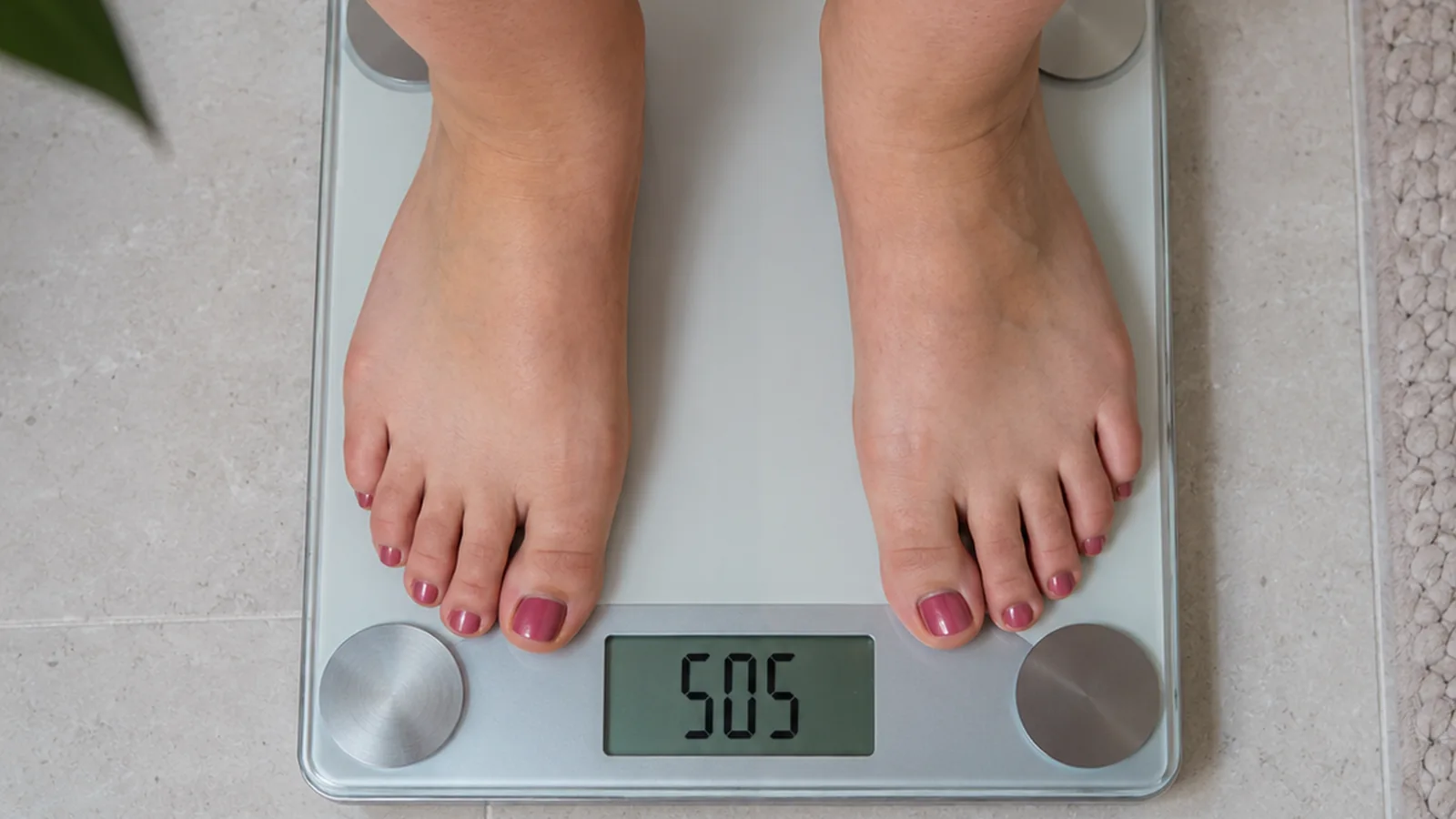
A bathroom scale measures total mass. It does not separate fat from water or the other components of your body. That distinction matters when you compare one unusually low or high reading with a month-end goal.
A study of two-week weight changes in 46 adults found that short-term variation under unrestricted living conditions was largely associated with fat-free mass and water. The participants were, on average, close to energy balance. This was not a prescribed weight-loss trial, so its results cannot tell you what proportion of your own diet-related change is water or fat.
The practical lesson is to avoid labeling every pound on the scale as a pound of fat. A quick drop is not proof that a plan should be made more restrictive, and a higher reading does not prove that the previous days were wasted.

| What you notice | What remains uncertain | Useful next step |
|---|---|---|
| A sharp early drop | How much of the change is fat rather than fluid or other mass. | Keep meals adequate and avoid projecting that pace forward. |
| A higher reading after a lower one | Whether the broader trend has changed. | Compare readings taken under similar conditions. |
| Less loss than your chosen target | Whether the target was appropriate or the routine needs adjustment. | Review the goal, health context and practical habits together. |
You do not need to explain every fluctuation yourself. The aim is to gather enough useful context to make a sensible decision, not turn each weigh-in into a diagnosis.
Why your first month may differ from someone else’s
Two people can begin on the same Monday with different starting circumstances: different health needs, treatments, activity patterns and access to food. Their plans may also involve different levels of support. Comparing the pounds they lose without that context tells you little about which approach is suitable.
There is also no reason to expect the same change every month. Research modeling changes in body weight accounts for the way energy expenditure and body composition change over time. A fixed calorie subtraction cannot be extended indefinitely into a straight-line prediction. The model is useful for understanding that limitation, not for promising an exact result for you.

If you want the detail on energy estimates, the calorie deficit guide explains that separate question. Recalculating an ever-lower intake from a monthly deadline skips the more important review of whether the plan is appropriate and nourishing enough.
A new eating schedule does not remove this uncertainty. The intermittent fasting evidence guide compares timing approaches with other dietary strategies. Choosing a named method does not supply a guaranteed monthly outcome.
Before copying a testimonial, ask what was actually done, what help was available and what happened after the first month. A photograph or single number may leave those questions unanswered. A routine that fits your own circumstances is a more useful subject for review.
Is losing 10 pounds in a month realistic?
It may happen on a scale, but that does not make it a suitable promise or personal goal. Ten pounds is about 4.5 kg. Over four weeks, it averages 2.5 pounds a week—above the CDC’s general gradual-loss range. That comparison is arithmetic, not a medical assessment of a particular person.
The same caution applies to searches for 20 or 30 pounds in a month. A larger advertised number does not show what was lost, whether the method was appropriate or whether the change lasted. NIDDK specifically warns against programs promising dramatic fixed results such as 30 pounds in 30 days.
If your plan would require skipping needed meals, exercising to compensate for eating or ignoring persistent weakness, review it rather than treating the deadline as non-negotiable. A clinician may recommend a different approach in a particular medical situation; that is different from following a generic online challenge independently.
You can keep the practical date and change its purpose: use it to look back at what you have learned. You do not need a more extreme target to make the next four weeks worthwhile.
Make your measurements useful before judging the month
If weighing is appropriate for you, NHS England recommends consistent measuring conditions: use the same scale on a firm, level floor, at a similar time of day, with similar clothing. It suggests regular intervals from weekly to monthly. Repeated checks throughout the day are not needed to follow that advice.
Two readings taken under different conditions are a weak basis for deciding what a whole month means. Note the conditions if they changed, rather than trying to compensate by eating less. You can bring the record to a professional if you are unsure how to interpret it.
Add a few observations that a scale cannot capture: were meals adequate, was your usual activity comfortable, and did the plan fit work and shared meals? These questions do not calculate fat loss. They help you decide whether the routine is workable.
If weighing makes you anxious or leads to compensatory rules, discuss another way to monitor your health. Avoid replacing one distressing measurement with a different compulsory body check.
Use the month to review a routine, not complete a challenge
A month can be a useful observation period. The following sequence is an organizational example, not a validated weight-loss program or a promise of change by week four.
Start by noticing the actual obstacle
Choose one problem you can describe: lunch is unavailable at work, dinner is often rushed, or movement has disappeared from your day. A short note about what happens is more actionable than deciding you need to be stricter.
Make one change you can repeat
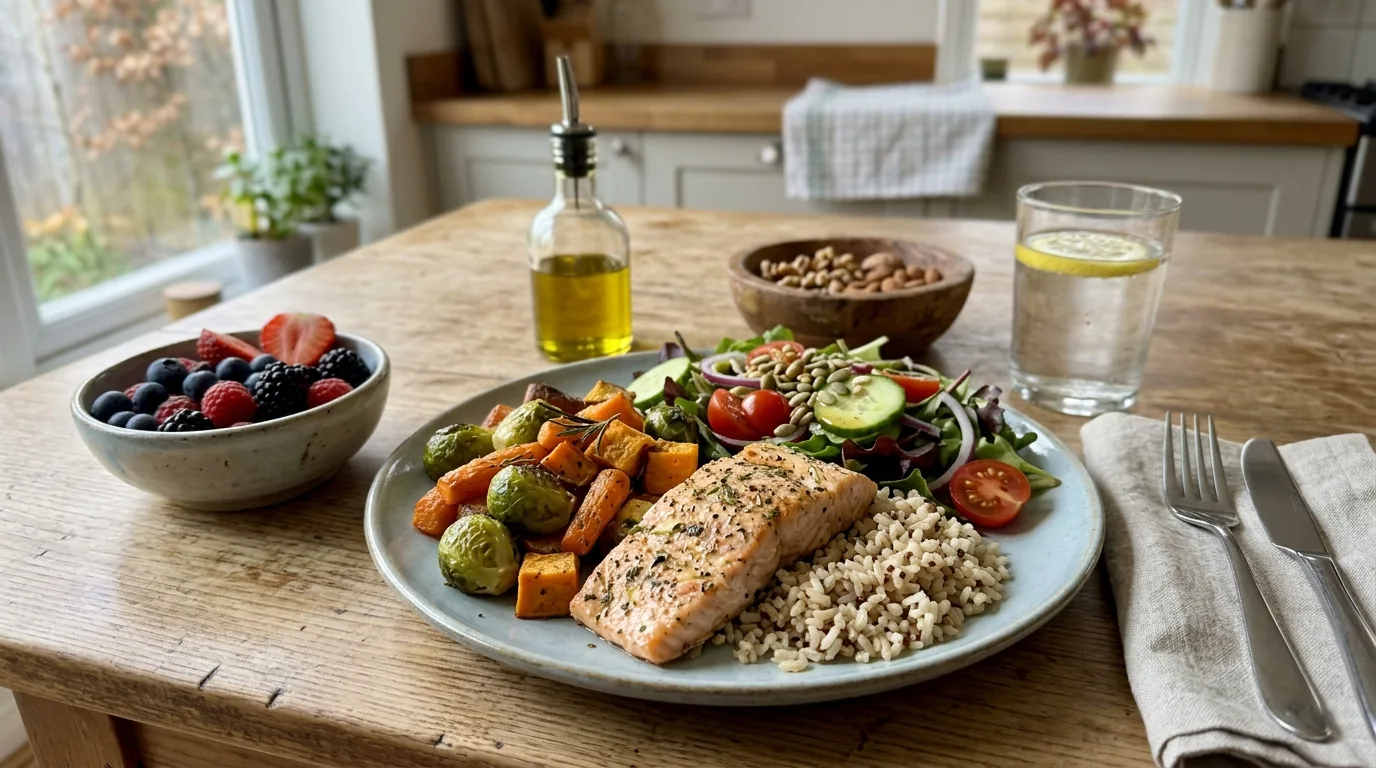
You might prepare a dependable lunch, keep ingredients for an easy dinner or plan a comfortable walk. Use the healthy eating guide for meal ideas. Choose something compatible with adequate food and your responsibilities, rather than building a month around deprivation.
The walking guide can help you choose a starting duration and intensity. A missed walk does not need to be repaid, and exercise should not become a way to earn meals.
Check what happened on the difficult days
Did the lunch preparation work only on quiet days? Could a simpler option help? Did a work shift make the planned walk impossible? Adapt the routine to the obstacle instead of assuming the only answer is less food or more exercise.
Review the trend and the next step together
At the end of the month, consider any comparable weight readings alongside comfort, meals and repeatability. Decide what to continue, what to simplify and what needs professional input. Maintaining a manageable routine can be a useful next step even when your original numerical goal needs revising.
If a previously falling trend has flattened, the weight loss plateau guide addresses that separate situation. One disappointing month-end reading alone does not establish a plateau or tell you to restrict more.
When a general monthly guide is not enough
This article is about adult expectations, not deciding who needs to lose weight. If you are under 18, pregnant, breastfeeding, have a history of an eating disorder or have a medical condition or treatment affecting eating or weight, seek individual advice before deliberately restricting intake. No monthly target here is intended for those situations.
The National Institute of Mental Health describes eating-disorder concerns including fixation on weight or food, severe restriction and compensatory behaviors. These difficulties can occur across body sizes. You do not have to reach a particular weight to ask for support.
Unplanned loss needs a different response from a dieting target. The NHS advises medical review if you keep losing weight without changing diet or exercise, and prompt assessment when other symptoms accompany the loss. Do not wait for a month-end weigh-in to discuss a continuing unexplained change.

Bring the details that help: what changed, whether it was intentional, how you have been eating, symptoms, medicines and any measurements taken under similar conditions. Do not change a medicine independently to influence your weight.
Choose a next step you can explain in ordinary terms: have a suitable lunch available, make room for comfortable movement, or book an appointment to review the goal. The calendar can organize that step without becoming a deadline your body must meet.
Frequently asked questions
How much weight can you safely lose in a month?
There is no safe monthly number that applies to everyone. General CDC guidance describes gradual loss of about 1 to 2 pounds a week. Over four weeks that is roughly 4 to 8 pounds, or 1.8 to 3.6 kilograms, as an arithmetic illustration. It is not a personal prediction, a minimum to achieve or a universal safety limit. Whether weight loss is appropriate and what pace suits you require individual context.
Is losing 10 pounds in a month realistic?
Some people may see that amount of scale change, but it should not be promised or treated as the right target for everyone. Ten pounds over four weeks averages 2.5 pounds a week, above the CDC’s general gradual-loss range. The arithmetic cannot establish safety or tell you how much was fat. Discuss a faster or difficult-to-maintain change with a qualified health professional rather than designing a crash diet around it.
Does losing less than 4 pounds in a month mean my plan failed?
Not necessarily. Four pounds is not a required monthly minimum. Look at comparable measurements, the broader trend, how adequately you are eating and whether the routine is manageable. Your health and goals may make a slower change or weight maintenance appropriate. If the picture is unclear, review it with a professional rather than automatically cutting more food.
Does a quick drop on the scale mean I lost that much body fat?
No. A scale measures total body mass, not fat alone. Fluid and other components can contribute to a short-term change. A large early drop cannot be assumed to be all fat or projected forward as the result you will get every week. Home weigh-ins cannot precisely separate the components of that change.
How often should I weigh myself while reviewing a month?
If weighing is appropriate for you, NHS England suggests regular intervals from weekly to monthly, using consistent conditions such as the same scale, time of day and similar clothing. There is no need to repeatedly check through the day. If measurements cause distress or trigger restrictive or compensatory behavior, discuss another way to monitor your health with a qualified professional.
Sources
- CDC: Steps for Losing Weight
- NIDDK: Choosing a Safe and Successful Weight-loss Program
- Hall and colleagues, The Lancet: Quantification of the Effect of Energy Imbalance on Bodyweight
- Bhutani and colleagues, Physiological Reports: Composition of Two-week Change in Body Weight under Unrestricted Free-living Conditions
- NHS England: How to Record Your Weight — PDF
- NHS: Unintentional Weight Loss
- NIMH: Eating Disorders — What You Need to Know