15 Healthy Eating Tips That Actually Work in Real Life
Healthy eating should support your life — not take it over.
You do not need to follow a perfect meal plan, eliminate every food you enjoy or spend hours preparing meals. In most cases, eating better begins with a few simple decisions that you can repeat consistently.
In my work as a nutritionist, I prefer to focus on what can be added, improved and made easier, rather than beginning with a long list of forbidden foods.
Healthy eating is not determined by one lunch, one dessert or one weekend. What matters most is your overall eating pattern over time. Current guidance from the CDC and the American Heart Association emphasises vegetables, fruits, whole grains, varied protein sources, unsaturated fats and minimally processed, nutrient-dense foods as the foundation of a balanced eating pattern.
Here are 15 realistic healthy eating tips that can help you eat better without turning food into another source of pressure.
1. Start with one meal
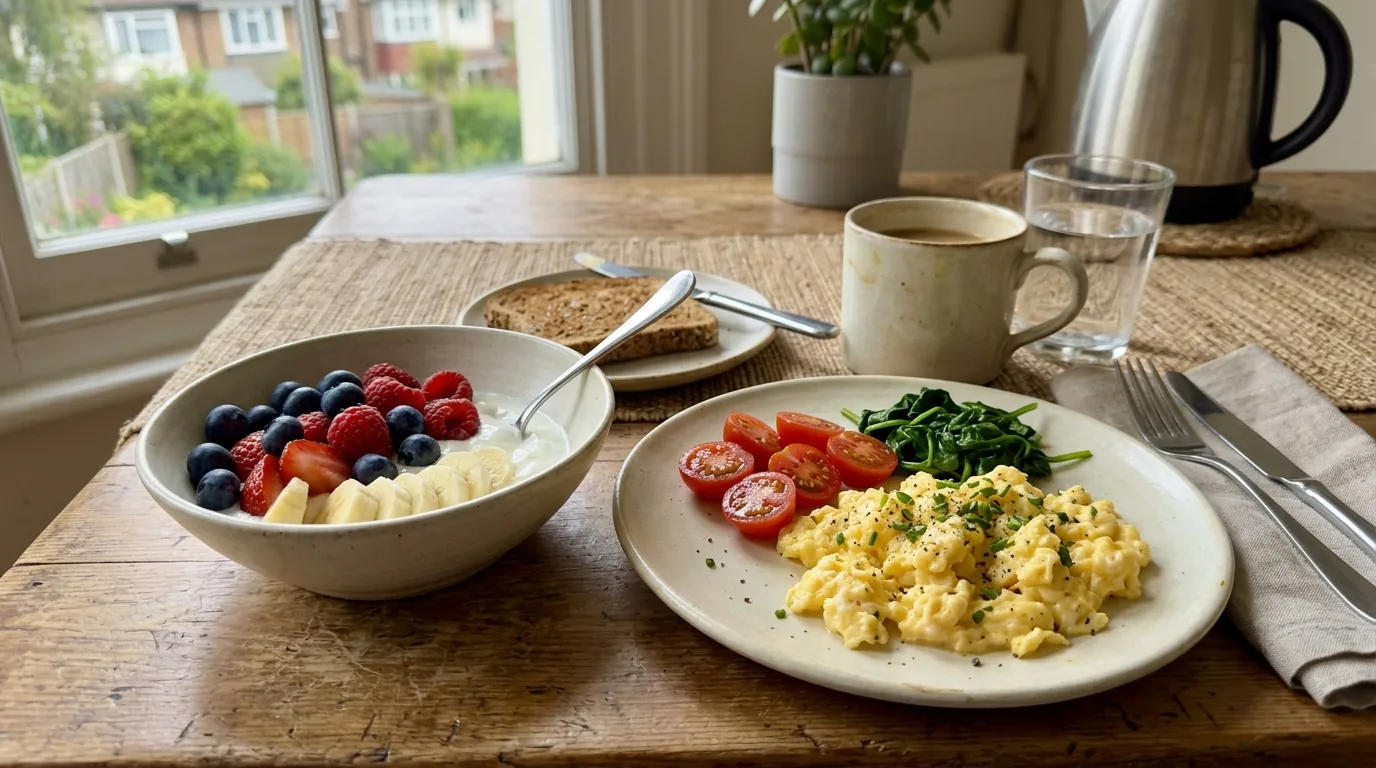
Trying to change your entire diet overnight usually creates unnecessary pressure. Instead, begin with the meal that currently feels the least balanced or the most difficult to manage. For example:
- If breakfast leaves you hungry soon afterward, add a source of protein and fibre.
- If lunch is often skipped, prepare one or two simple options in advance.
- If dinner regularly becomes an unplanned takeaway, keep ingredients for one dependable meal at home.
- If afternoons are difficult, prepare a satisfying snack before you become extremely hungry.
One improved meal is easier to repeat than a completely new lifestyle. Once that meal begins to feel natural, move on to another.
2. Build meals around nutrient-dense foods
A useful starting point is to make nutrient-dense and minimally processed foods the foundation of most meals. These may include:
- Vegetables
- Fruits
- Beans, lentils and peas
- Eggs
- Fish and seafood
- Poultry or lean meat
- Plain yogurt and other dairy foods
- Nuts and seeds
- Whole grains
- Olive oil and other unsaturated plant oils
The goal is not to prepare every meal from scratch or avoid every packaged product. Frozen vegetables, canned beans, whole-grain bread, plain yogurt and packaged whole grains can all be practical parts of a balanced diet.
Do not aim for food “purity.” Aim to make nutritious foods your usual starting point.
3. Add vegetables or fruit to your meals
Instead of immediately removing something from your plate, ask: What vegetable or fruit could I add to this meal?
You might add:
- Berries or sliced fruit to yogurt or oatmeal
- Tomatoes and spinach to eggs
- A side salad to lunch
- Frozen vegetables to pasta, rice or soup
- Fruit alongside a sandwich
- Roasted vegetables with dinner
Fresh produce is not your only option. Frozen and canned fruits and vegetables can also be convenient and economical choices. For canned vegetables, compare sodium levels. For fruit, look for options packed in water or juice without unnecessary added sugars.
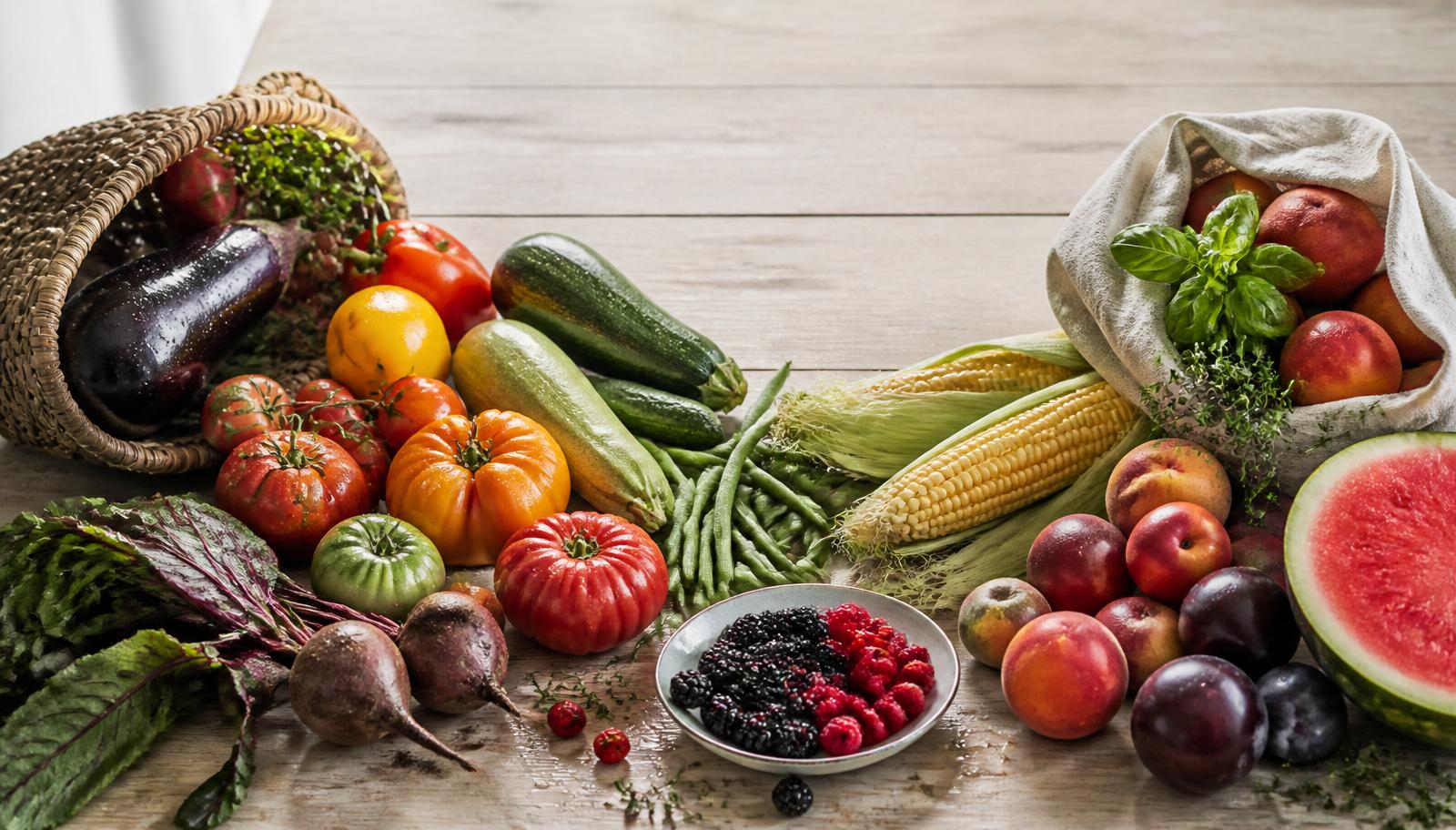
Variety is more useful than searching for one supposedly perfect vegetable. The different colours of fruits and vegetables make meals more interesting and provide a wider range of nutrients.
4. Include a source of protein
Protein helps make meals more complete and supports many essential functions in the body. Practical protein choices include:
- Eggs
- Plain or Greek-style yogurt
- Cottage cheese
- Beans and lentils
- Chickpeas
- Tofu and tempeh
- Fish and seafood
- Chicken or turkey
- Lean meat
- Nuts and seeds
Try to include some protein in your main meals rather than leaving most of it until dinner. You can also vary your protein sources throughout the week. The American Heart Association recommends regularly including plant proteins such as beans, peas, lentils and nuts, as well as fish, seafood and other lean protein sources.
A balanced breakfast might combine eggs with whole-grain toast and vegetables, or plain yogurt with oats, berries and nuts.
5. Choose higher-fibre carbohydrates
Carbohydrates do not need to be eliminated to make your diet healthier. A more useful question is: What type of carbohydrate am I choosing, and what am I eating with it?
Higher-fibre carbohydrate choices may include:
- Oats
- Brown or wild rice
- Quinoa
- Barley
- Whole-grain bread
- Whole-grain pasta
- Beans and lentils
- Potatoes with their skin
- Fruit
- Starchy vegetables
Whole grains, fruits, vegetables and legumes are all included in widely recommended healthy eating patterns. You do not need to replace every refined grain at once. Begin with changes that are easy to maintain, such as choosing whole-grain toast at breakfast or adding beans to a rice dish.
6. Include sources of unsaturated fats
Fat is an important part of a balanced diet. It adds flavour, helps meals feel more satisfying and supports the absorption of certain vitamins. Sources of unsaturated fats include:
- Extra-virgin olive oil
- Nuts
- Seeds
- Avocado
- Natural nut and seed butters
- Olives
- Fish
Rather than trying to remove as much fat as possible, pay attention to its source. For example, you might:
- Use olive oil for cooking or salad dressing
- Add walnuts or seeds to oatmeal
- Include avocado in a sandwich or salad
- Choose fish instead of processed meat for some meals
The overall pattern matters more than one individual ingredient.
7. Make water your usual drink
Sugary drinks can contribute substantial amounts of added sugar without making a meal particularly satisfying. Water does not have to be your only beverage, but it can become your usual choice throughout the day.
To make water more appealing, try adding:
- Lemon or lime
- Cucumber
- Mint
- Fresh berries
- Orange slices
Unsweetened tea and coffee can also fit into a balanced diet for many adults. There is no single fluid target that is right for everyone. Individual needs can vary according to body size, activity, temperature, pregnancy, breastfeeding and certain health conditions.
A practical habit is to keep water nearby and drink regularly rather than relying on thirst alone.
8. Keep convenient foods at home
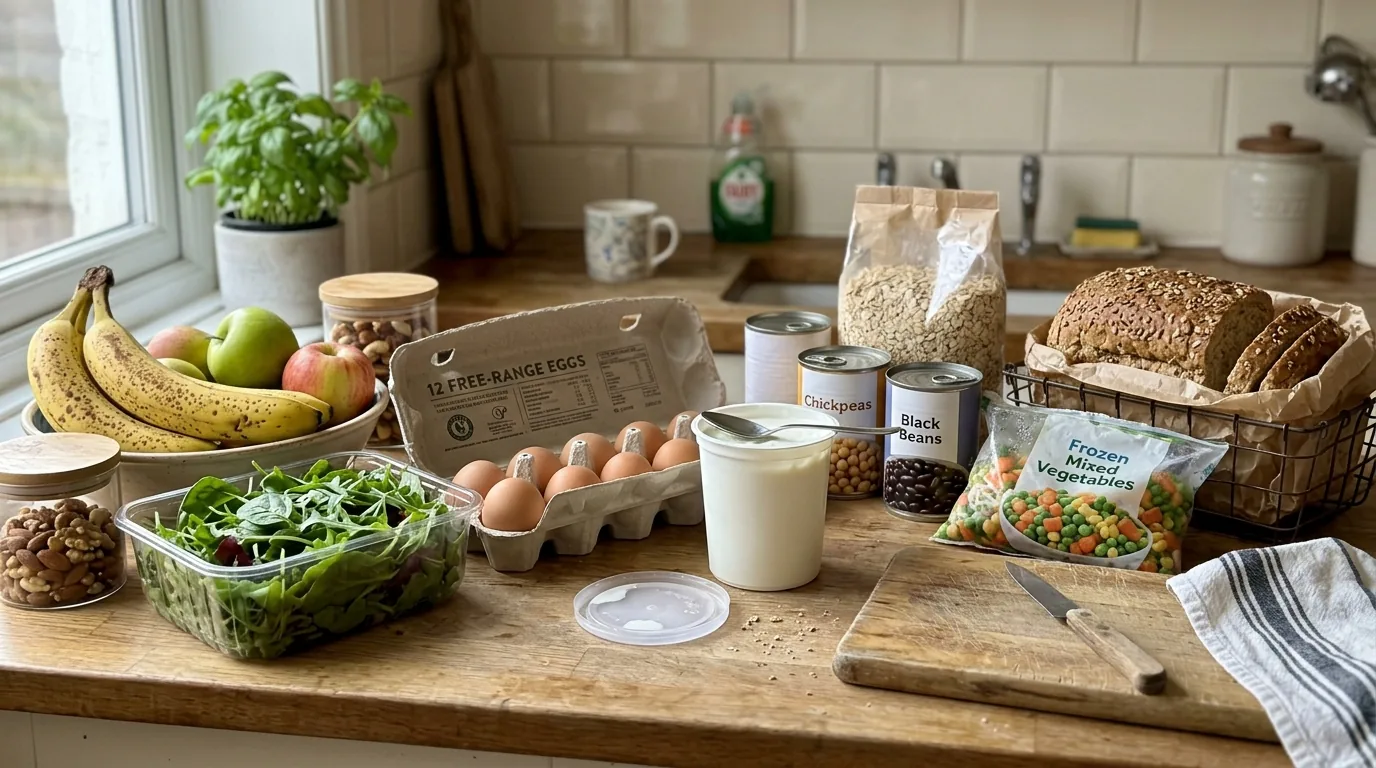
Healthy eating becomes much harder when every meal requires washing, chopping and cooking several ingredients. Convenience is not the enemy of good nutrition.
Useful foods to keep at home may include:
- Frozen vegetables
- Frozen berries
- Canned beans and lentils
- Canned tuna or salmon
- Eggs
- Plain yogurt
- Prewashed salad leaves
- Whole-grain bread
- Microwaveable brown rice or quinoa
- Hummus
- Nuts and seeds
- Simple soups
These ingredients can become quick meals:
- Eggs, frozen vegetables and whole-grain toast
- Rice, beans, avocado and salsa
- Yogurt, fruit, oats and nuts
- Tuna, potatoes and salad
- Soup with bread and a source of protein
A ten-minute balanced meal is still a balanced meal.
9. Read food labels strategically
You do not need to analyse every number on a package. Start with four areas.
Serving size
Nutrition information is normally listed for a specific serving. That serving may not be the same as the amount you usually eat.
Added sugars
Added sugars are different from sugars naturally present in foods such as fruit or plain milk.
Sodium
When comparing similar products, the Nutrition Facts label can help you identify the option with less sodium.
Saturated fat
Look at the amount per serving, particularly when comparing packaged foods that you eat regularly.
The FDA identifies saturated fat, sodium and added sugars as nutrients many people may benefit from limiting. It also recommends checking serving size because eating two servings means consuming approximately twice the nutrients and calories listed for one serving.
Do not let one number determine whether a food is “good” or “bad.” Consider the whole product, how frequently you eat it and what role it plays in your overall diet.
10. Plan a few meals before shopping
Meal planning does not have to mean preparing 21 different meals for the week. A simpler approach is to select:
- Two breakfast options
- Two lunch options
- Three dinners
- Two snacks
Check what is already in your kitchen before creating your shopping list. Choose recipes that use some of the same ingredients. For example, spinach can be used in eggs, salads, soup and pasta. Roasted vegetables can be served at dinner and added to lunch the next day.
You can also intentionally cook an extra portion of dinner for the following day. The purpose of meal planning is not to control every meal. It is to reduce the number of last-minute decisions you need to make.
11. Add before you subtract
Restrictive advice often begins with everything you are supposed to stop eating. A more sustainable approach is to improve the structure of the meal first.
Instead of simply removing pasta, add vegetables and a source of protein. Instead of banning bread, combine it with eggs, avocado, cottage cheese or soup. Instead of avoiding all snacks, create a more balanced snack using two food groups.
Examples include:
- Apple and peanut butter
- Yogurt and berries
- Carrots and hummus
- Whole-grain crackers and cheese
- Banana and a handful of nuts
Instead of automatically eliminating dessert, make sure your main meal is satisfying and then decide whether you still want it. Adding nourishment often improves a meal more effectively than creating another restriction.
12. Make nutritious choices easier to see
Your food environment can influence what you choose, especially when you are busy, tired or hungry. Make useful foods visible and accessible:
- Keep washed fruit where you can see it.
- Store nuts in easy-to-reach containers.
- Place prepared vegetables at eye level in the refrigerator.
- Freeze individual portions of leftovers.
- Prepare one grain or protein source in advance.
- Keep ingredients for one quick meal permanently available.
Less nutritious snack foods do not have to be banned. However, they do not need to occupy the most visible and accessible places in the kitchen. This is not about relying on more discipline. It is about making helpful decisions require less effort.
13. Eat with more attention
Many people regularly eat while working, driving, scrolling or watching television. In these situations, it can be difficult to notice the taste of the food or recognise when a meal has become satisfying. You do not need to practise perfect mindful eating. Begin with one small change:
- Sit down for the first five minutes of the meal.
- Put your phone aside.
- Pause halfway through.
- Notice the flavour and texture.
- Ask whether you are still hungry or comfortably satisfied.
Eating more attentively is not about following another strict rule. It is a way to reconnect with the experience of eating and notice your individual signals more clearly.
14. Leave room for flexibility
Healthy eating should be able to include:
- Birthdays
- Holidays
- Travel
- Restaurants
- Family traditions
- Favourite foods
- Meals chosen simply for pleasure
One meal does not determine the quality of your diet. There is also no need to compensate for a restaurant meal by skipping your next meal or severely restricting food the following day. Simply return to healthy eating habits and your normal routine.
A flexible eating pattern is usually easier to maintain than a plan that only works when life is perfectly organised.
15. Focus on consistency rather than perfection
The most important healthy eating tip is also the least dramatic: repeat the basics more often than not.
A simple breakfast eaten regularly is more useful than an elaborate breakfast you prepare only once. Vegetables you genuinely enjoy are more useful than a fashionable ingredient you dislike. A realistic meal plan is better than an ideal plan that leaves you exhausted.
Healthy eating is not a test that you either pass or fail. It is a collection of habits that can change with your schedule, budget, culture, preferences and stage of life.
A simple balanced meal formula
When you do not know what to prepare, use this flexible structure:
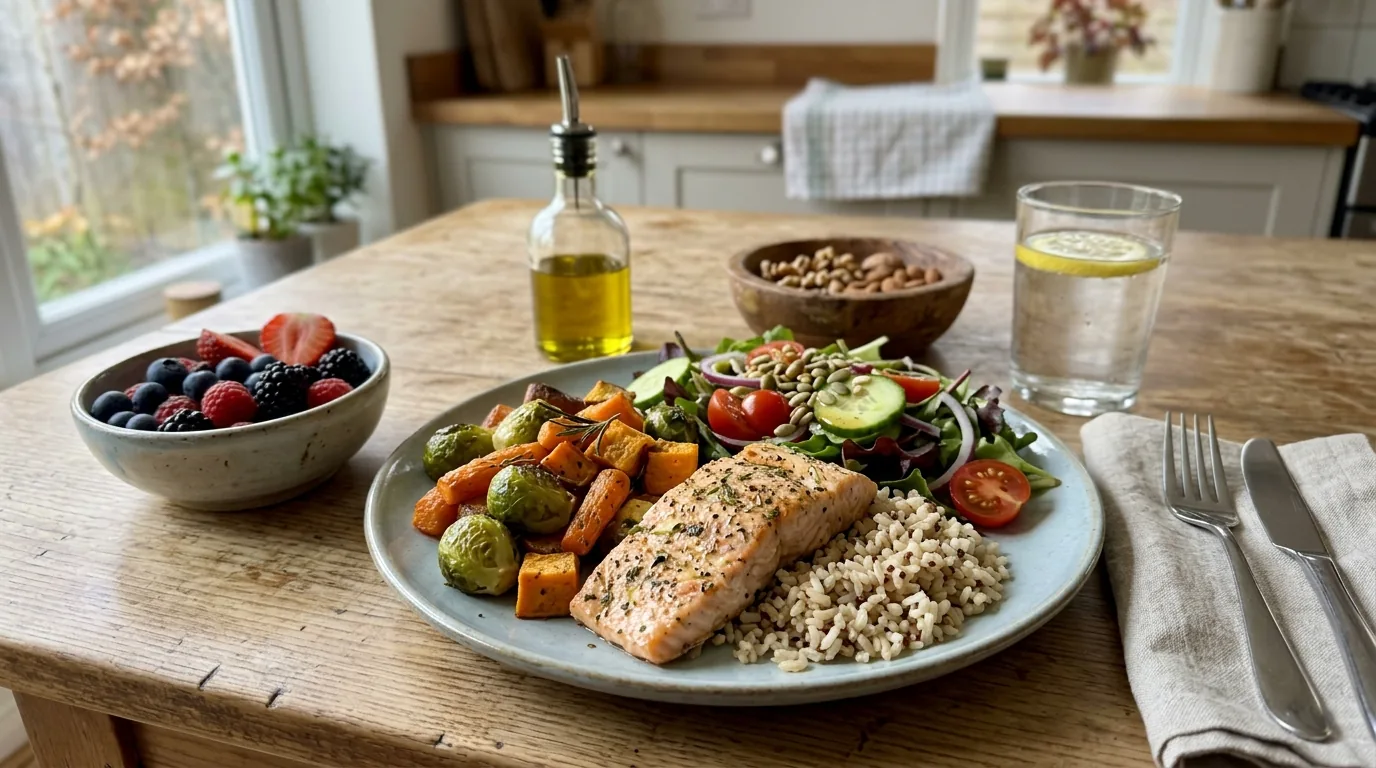
Vegetables or fruit + protein + fibre-rich carbohydrate + source of unsaturated fat
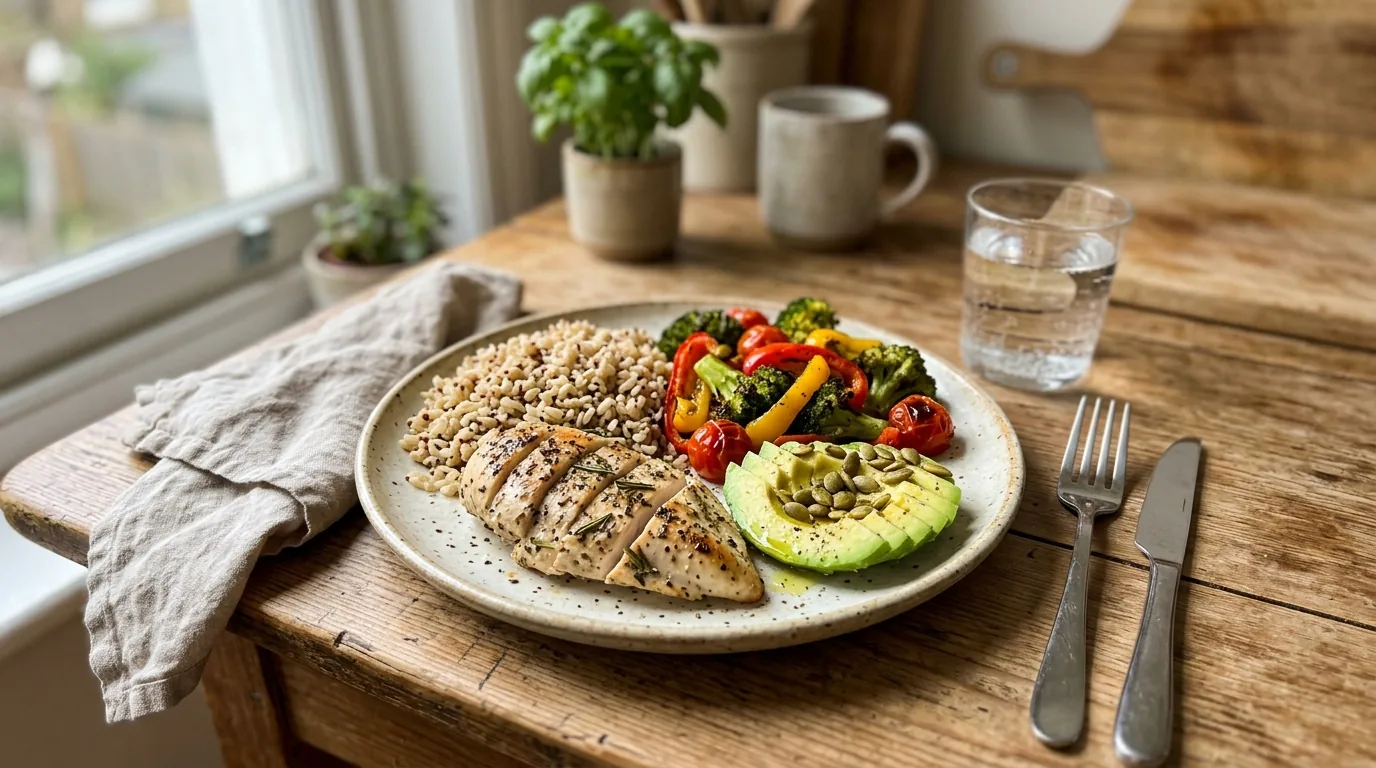
For example:
- Roasted vegetables, salmon, potatoes and olive oil
- Lentils, brown rice, salad and tahini dressing
- Eggs, whole-grain toast, tomatoes and avocado
- Plain yogurt, berries, oats and walnuts
- Chicken, quinoa, vegetables and olive oil dressing
- Chickpeas, roasted vegetables, couscous and seeds
You do not need to use this formula at every meal. It is simply a practical tool for creating meals that feel more complete.
How to start eating healthier this week
Do not try to implement all 15 tips immediately. Choose only three actions:
- Add a vegetable or fruit to one meal each day.
- Plan three dinners before going grocery shopping.
- Keep one quick, balanced meal available for busy days.
Practise these actions for a week before adding anything else. Small changes may not feel impressive, but they are often easier to repeat — and repetition is what turns an intention into a habit. Building around seasonal foods, and knowing what is in season in August or in any other month, can make this routine feel even more natural.
Frequently asked questions
What are the five most important healthy eating tips?
A useful starting point is to:
- Eat a variety of vegetables and fruits.
- Include a protein source in your main meals.
- Choose higher-fibre carbohydrates more often.
- Make water your usual drink.
- Base most meals on nutrient-dense, minimally processed foods.
You do not need to introduce all five changes at once.
How can a beginner start eating healthy?
Begin with one meal rather than trying to change your entire diet. Look at a meal you eat frequently and identify what may be missing. Could you add:
- A source of protein?
- A vegetable?
- A piece of fruit?
- A higher-fibre carbohydrate?
- A source of unsaturated fat?
Once that change becomes familiar, improve another meal.
Can I eat healthy on a limited budget?
Yes. Nutritious meals do not need to depend on expensive ingredients. Affordable options can include:
- Beans and lentils
- Eggs
- Oats
- Potatoes
- Canned fish
- Frozen vegetables
- Seasonal produce
- Store-brand whole grains
- Plain yogurt
- Peanut butter
Planning meals before shopping, comparing unit prices and using the same ingredient in several meals can also help reduce waste.
Do I need to stop eating sugar, bread or pasta?
Most people do not need to eliminate entire food groups to improve their eating habits. Instead, consider:
- How frequently you eat the food
- The portion
- The overall nutritional quality
- What you eat alongside it
- How the meal makes you feel
Bread and pasta, for example, can be part of balanced meals when combined with vegetables, protein and an appropriate source of fat.
Are processed foods always unhealthy?
No. Food processing exists on a spectrum. Frozen vegetables, canned beans, plain yogurt, whole-grain bread, tofu and canned fish are all processed to some degree but can remain useful and nutrient-dense foods.
Rather than avoiding every packaged food, pay closer attention to products that provide large amounts of added sugars, sodium or saturated fat and make up a significant part of your everyday diet.
How long does it take to develop healthy eating habits?
There is no universal timeline. Some changes may begin to feel natural within a few weeks, while others require more time and adjustment. Focus on whether the habit fits your real life rather than trying to complete a fixed challenge perfectly. A habit that can be maintained imperfectly is generally more useful than a strict routine that is quickly abandoned.
Final thoughts
Healthy eating is not about creating a flawless plate. It is about developing a pattern that provides nourishment, enjoyment and enough flexibility to work in everyday life.
Start with one meal. Add something useful. Make your next choice a little easier. You do not need to change everything today. You only need to choose the first habit you are willing to repeat.
Sources
- Centers for Disease Control and Prevention. Healthy Eating Tips.
- American Heart Association. The American Heart Association’s Diet and Lifestyle Recommendations.
- American Heart Association. Healthy Eating.
- U.S. Food and Drug Administration. How to Understand and Use the Nutrition Facts Label.
- U.S. Food and Drug Administration. What’s on the Nutrition Facts Label.
- American Heart Association. Fresh, Frozen or Canned Fruits and Vegetables — All Can Be Healthy Choices.