Coffee Consumption: How Much Coffee Is Healthy Per Day?
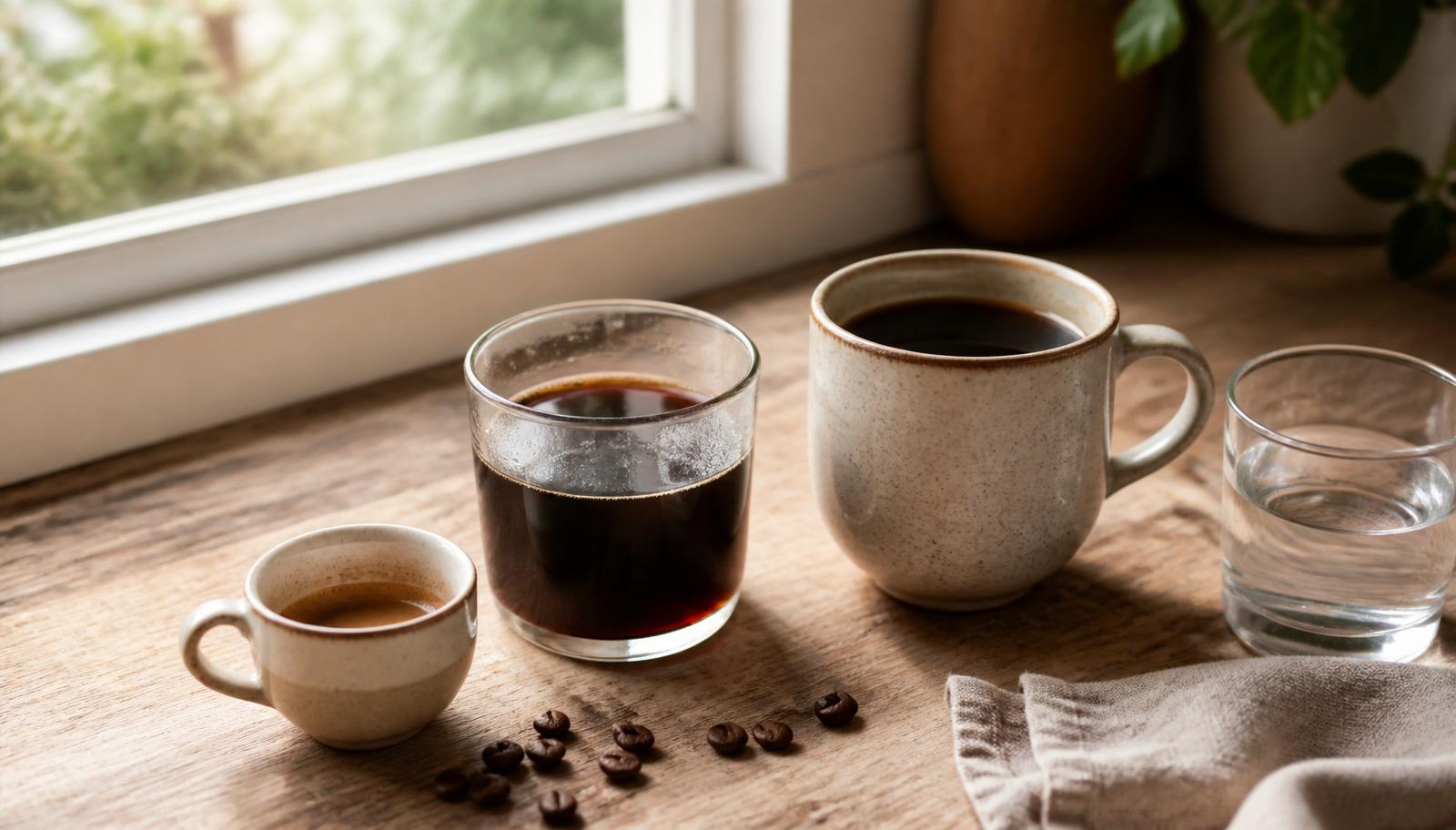
Coffee consumption is one of those everyday habits that can sound simple until we try to define what a “cup” actually means. An espresso, a home-brewed mug and a large coffee-shop drink can contain very different amounts of caffeine. The same dose can also feel comfortable for one person and cause palpitations, anxiety or poor sleep in another.
A new American Heart Association scientific statement, published in July 2026, concluded that up to 400 milligrams of caffeine per day — roughly three to five 8-fluid-ounce cups of regular caffeinated coffee — is generally considered safe for most adults. The statement also reported that moderate caffeinated coffee consumption appears to be associated with a lower risk of several cardiovascular conditions in some people. However, most of the evidence cannot prove that coffee itself causes these benefits, and 400 milligrams should be understood as an upper reference level rather than a daily target.
So, how much coffee is healthy per day? The practical answer depends on the caffeine content, the size of your drink, the time you drink it, what you add to it and how your body responds. This guide translates current professional guidance into realistic everyday choices.
Coffee consumption: the quick answer
What is moderate coffee consumption?
Moderate coffee consumption is usually defined by caffeine intake rather than by the number printed on a cup. Current professional guidance commonly uses a daily ceiling of 400 milligrams for healthy adults, consumed across the day rather than all at once.
The word “moderate” is important. The latest American Heart Association statement did not recommend that non-coffee drinkers begin drinking coffee for heart health, and it did not suggest that more coffee is always better. It reviewed the available evidence and concluded that moderate intake is generally safe for most adults while very high doses — particularly from concentrated products and some energy drinks — can cause harm.
Your personal level may be lower than the general population limit. Caffeine sensitivity is influenced by genetics, age, habitual intake, medications, health conditions and how quickly the liver metabolises caffeine. A person who sleeps well after an afternoon coffee may not have the same response as someone who becomes restless after a small morning cup.
How many cups of coffee equal 400 mg of caffeine?
There is no single conversion because coffee is not a standardised dose. Bean variety, roast, grind, brewing method, extraction time, serving size and the recipe used by a café all influence caffeine content.
Official estimates illustrate the variation. EFSA lists approximately 90 milligrams for a 200-millilitre cup of filter coffee and about 80 milligrams for a 60-millilitre espresso. The FDA reports that a 12-fluid-ounce brewed, non-specialty coffee may contain approximately 113 to 247 milligrams. Decaffeinated coffee is much lower, but it is not necessarily caffeine-free.
This explains why counting “cups” can be misleading. Four small home coffees may remain below 400 milligrams, while two large, strong café drinks may approach or exceed it. When possible, check the caffeine information provided by the brand or café and count caffeine from tea, cola, chocolate, energy products, supplements and medicines as well as coffee.
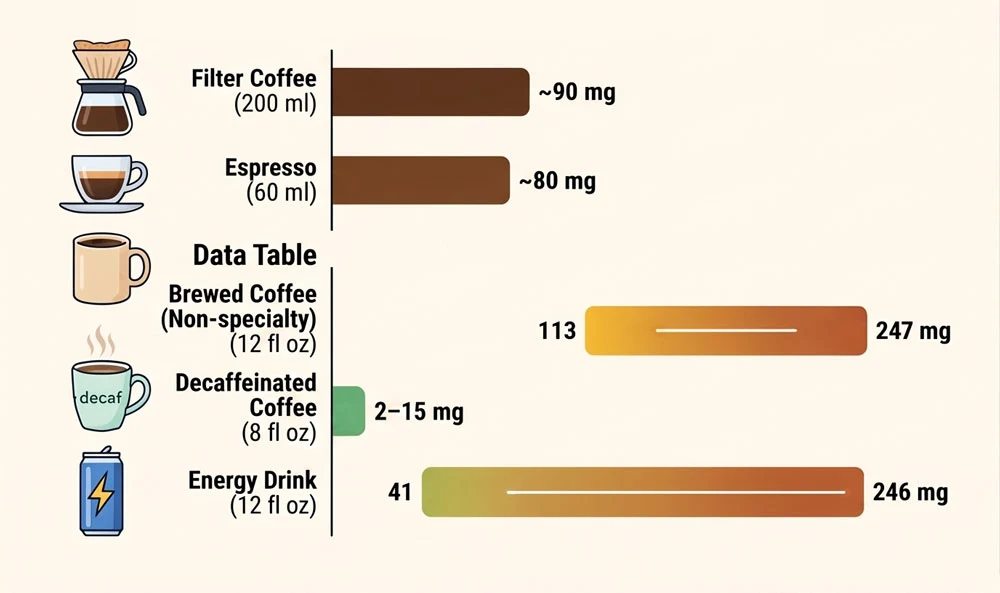
Official caffeine examples
Approximate values from EFSA and the FDA. Actual products and serving sizes vary.
| Drink | Typical serving | Approximate caffeine |
|---|---|---|
| Filter coffee | 200 ml | About 90 mg (EFSA) |
| Espresso | 60 ml | About 80 mg (EFSA) |
| Brewed non-specialty coffee | 12 fl oz / 355 ml | About 113–247 mg (FDA) |
| Decaffeinated coffee | 8 fl oz / 237 ml | About 2–15 mg (FDA) |
| Energy drink | 12 fl oz / 355 ml | About 41–246 mg (FDA) |
Coffee consumption and health: what the evidence suggests
Coffee contains caffeine, but it also contains many other biologically active compounds. That makes coffee research difficult to interpret: an observed effect may relate to caffeine, another coffee compound, the brewing method or lifestyle differences between coffee drinkers and non-drinkers.
The 2026 American Heart Association statement reviewed research on blood pressure, cholesterol, type 2 diabetes, coronary heart disease, stroke, heart failure and heart rhythm. It found that moderate black caffeinated coffee consumption was generally not associated with increased cardiovascular risk for most adults and was linked in observational research to lower risk for several cardiovascular outcomes in some people.
The wording matters. An association does not prove cause and effect. People who drink moderate amounts of coffee may differ from non-drinkers in many ways that are difficult to measure, and the benefits observed in population studies cannot be treated as a prescription. Coffee is not a treatment for heart disease, diabetes or any other condition.
Coffee and heart health
For many adults, moderate coffee consumption appears compatible with cardiovascular health. The American Heart Association reported that two to four cups of caffeinated coffee per day were linked to a lower risk of heart disease, heart failure and stroke in the research it reviewed. At the same time, the statement emphasised that responses differ and that more research is needed.
Caffeine can produce short-term changes. It may temporarily increase alertness, heart rate and blood pressure, and some people experience palpitations. If coffee repeatedly causes a racing or irregular heartbeat, dizziness, chest discomfort or other concerning symptoms, the answer is not simply to compare your intake with the 400-milligram limit. Stop or reduce the caffeine and seek appropriate medical advice.
Energy drinks should not be treated as equivalent to coffee. Some contain high concentrations of caffeine along with additional ingredients, and the American Heart Association linked high-dose caffeine from energy drinks and shots with increased blood pressure and abnormal heart rhythms.
Does the brewing method matter?
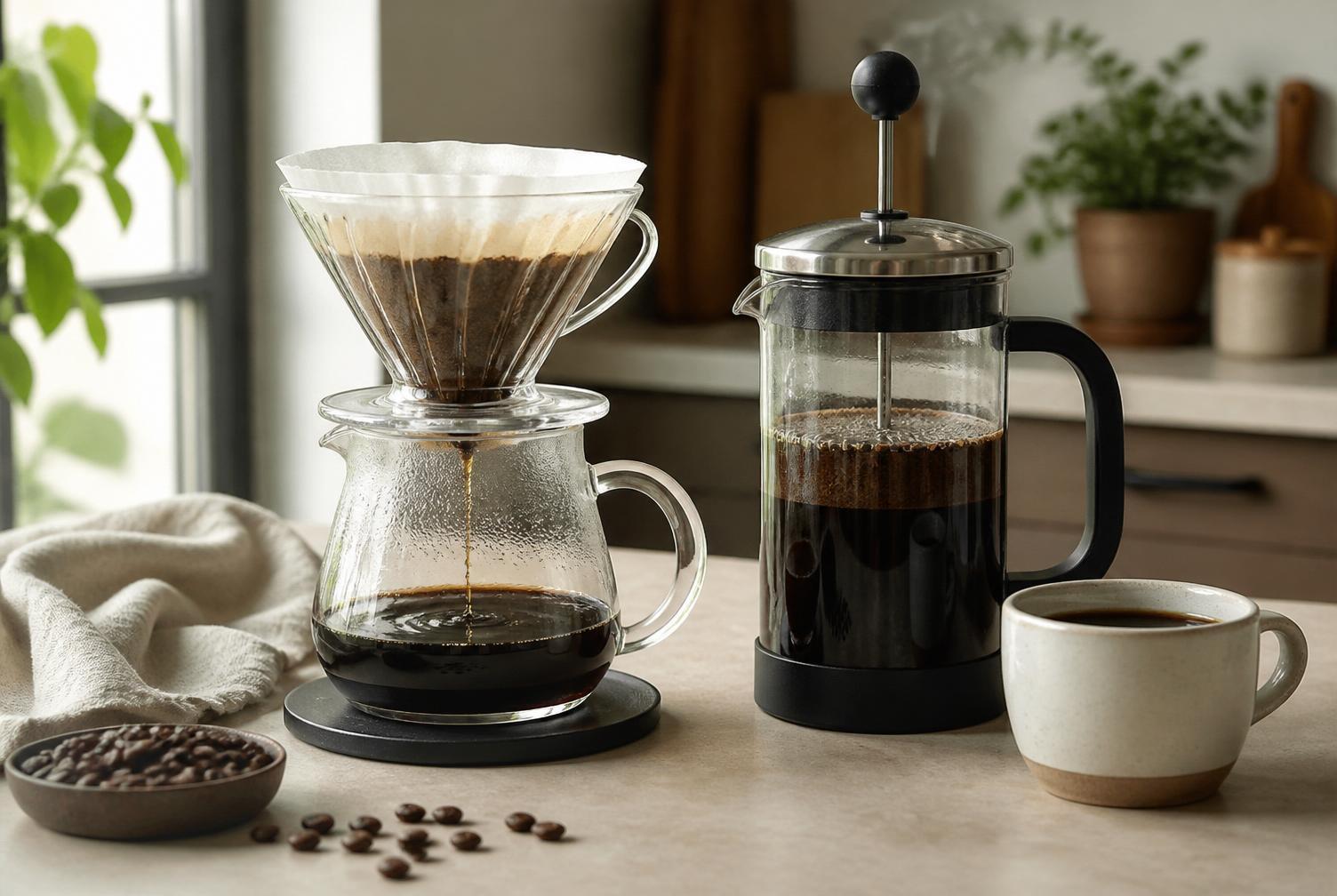
Yes. The brewing method changes more than flavour. Cafestol is a coffee compound that can raise LDL cholesterol. According to the American Heart Association statement, cafestol is present in unfiltered preparations such as French press, Turkish coffee, boiled coffee and espresso, while paper-filtered and instant coffee contain much less.
This does not mean that an occasional espresso is dangerous. It means that someone who drinks several unfiltered coffees every day — particularly a person already managing elevated LDL cholesterol — may wish to discuss their overall pattern with a qualified healthcare professional and consider using paper-filtered coffee more often.
What you add to coffee changes the drink
Research headlines about coffee usually refer to coffee itself, often black coffee, not a dessert-style beverage with several pumps of syrup, whipped cream and added sugar. A sweetened speciality drink may still fit into someone’s diet, but it has a different nutritional profile from plain coffee.
A useful approach is to separate two questions: how much caffeine are you consuming, and what else is in the drink? Milk, plant-based alternatives, sugar and flavoured syrups can all change energy, sugar and nutrient content. The caffeine limit does not automatically make every caffeinated drink a healthy choice.
Coffee consumption and sleep
Sleep is often the first place where a tolerable amount of caffeine becomes personally excessive. EFSA notes that a single 100-milligram dose may affect sleep duration and sleep patterns in some adults, particularly when consumed close to bedtime.
Caffeine can remain active for hours, and the best cut-off time is individual. Rather than relying on a universal rule, observe whether afternoon or evening coffee delays sleep, makes sleep lighter or leaves you tired the next morning. If it does, move your last caffeinated drink earlier, reduce the dose or switch to decaf.
It is also worth remembering that tolerance to the feeling of stimulation does not always mean sleep is unaffected. Someone may say coffee no longer makes them feel energetic while still experiencing poorer sleep after late caffeine.
Signs your coffee consumption may be too high
The FDA lists several possible signs of excessive caffeine intake: increased heart rate, heart palpitations, high blood pressure, insomnia or sleep disruption, anxiety, jitters, upset stomach, nausea and headache.
These symptoms can occur below 400 milligrams in a sensitive person. The population-level limit is not a guarantee that a specific dose is comfortable or suitable for you. Your useful limit is the lower of two numbers: the amount considered generally safe for your group and the amount your body tolerates without unwanted effects.
If you want to reduce daily coffee consumption, do it gradually. The FDA notes that caffeine withdrawal is not considered dangerous, but it can be unpleasant. Reducing cup size, mixing regular and decaf, or removing one serving every few days may be easier than stopping suddenly.
Who may need to limit caffeine more carefully?
General adult guidance does not apply equally to everyone. Extra care is appropriate in the following situations:
- Pregnancy and breastfeeding. EFSA and the American College of Obstetricians and Gynecologists use 200 milligrams per day from all sources as the usual upper reference level during pregnancy. Personal medical guidance should take priority.
- Medication use or medical conditions. Some medicines and health conditions can change caffeine sensitivity or make its effects more concerning. The FDA recommends discussing caffeine with a healthcare professional when a condition, medication, pregnancy or breastfeeding may require a lower intake.
- Strong symptoms at low doses. Palpitations, anxiety, tremor, digestive symptoms or sleep problems are meaningful even when intake is below a general limit.
- Children and adolescents. Adult limits should not be applied to children. The FDA notes that medical experts advise against energy drinks for children and teenagers.
How to build a healthier coffee routine
A healthy coffee routine is less about chasing an ideal number and more about making your intake visible. These steps can help:
- Count milligrams, not just cups. Check serving size and caffeine information whenever it is available.
- Include every source. Tea, cola, chocolate, energy drinks, pre-workout products, supplements and some medicines can add to the daily total.
- Treat 400 milligrams as a ceiling, not a goal. Drinking less is completely acceptable, and there is no need to increase coffee consumption for possible health benefits.
- Pay attention to timing. Move caffeine earlier if it affects sleep, even if your total intake is moderate.
- Notice symptoms. A personal reaction matters more than an average guideline.
- Consider the brewing method. Paper-filtered coffee may be a useful everyday choice for people concerned about LDL cholesterol.
- Keep additions intentional. A coffee can be simple, or it can become a sweetened snack in liquid form. Choose it consciously rather than assuming every coffee drink is nutritionally equivalent.
- Reduce gradually when needed. Smaller cups, half-caf and decaf can make the transition more comfortable.
The bottom line
Current evidence supports a reassuring but nuanced conclusion: for most healthy adults, coffee consumption providing up to 400 milligrams of caffeine per day is generally considered safe. Depending on the drink, that may be around three to five small 8-fluid-ounce cups, or only two to three larger 12-fluid-ounce cups.
The number is not a recommendation to drink more coffee. The best amount is the one that remains within professional guidance, does not disturb your sleep, does not trigger symptoms and fits the rest of your diet and health needs.
Coffee can be part of a balanced routine, but it is not a medicine and it is not risk-free for everyone. If you have cardiovascular symptoms, a medical condition, take medication, are pregnant or are unsure about your personal caffeine tolerance, speak with an appropriate healthcare professional.
Frequently asked questions
Is five cups of coffee a day safe?
It may be safe for some adults only when the servings are small and the total caffeine stays within an appropriate limit. The American Heart Association’s comparison uses 8-fluid-ounce cups. Five large or highly caffeinated drinks could exceed 400 milligrams.
Is 400 mg of caffeine a recommended daily target?
No. It is a general upper reference level for most healthy adults, not a target. Some people feel best with far less, and specific groups need lower limits.
How much caffeine is in one cup of coffee?
It varies widely. EFSA estimates about 90 milligrams in a 200-millilitre filter coffee and about 80 milligrams in a 60-millilitre espresso. The FDA reports approximately 113 to 247 milligrams in a 12-fluid-ounce brewed coffee.
Is decaf coffee completely caffeine-free?
Usually not. The FDA reports that an 8-fluid-ounce decaf coffee typically contains about 2 to 15 milligrams of caffeine, although amounts vary.
Can coffee raise blood pressure?
Caffeine can cause a temporary rise in blood pressure, and high doses are more concerning. Individual responses vary, so people with hypertension or symptoms should discuss their intake with a healthcare professional.
How much coffee is safe during pregnancy?
Professional guidance commonly limits total caffeine from all sources to no more than 200 milligrams per day during pregnancy. Individual advice from an obstetric or healthcare professional should take priority.
Sources reviewed
- American Heart Association. “Coffee and heart health: How many cups of caffeinated coffee are safe to drink each day?” Published July 20, 2026.
- U.S. Food and Drug Administration. “Spilling the Beans: How Much Caffeine is Too Much?”
- European Food Safety Authority. “Caffeine” safety assessment and consumer guidance.
- American College of Obstetricians and Gynecologists. “Moderate Caffeine Consumption During Pregnancy.”