How to Get 30 Grams of Fiber a Day: A Simple Meal Plan
Getting around 30 grams of fiber a day is easier when you spread it across meals instead of trying to add it all at once. A bowl of oats, a piece of fruit, beans or lentils, vegetables and a whole-grain staple can add up to a useful daily total without unusual ingredients.
This sample plan provides approximately 30–32 grams of fiber. The exact amount depends on brands, preparation and serving size, so use package labels when precision matters. It is a general example for healthy adults, not a prescription or treatment for a digestive condition.
Quick answer
To get 30 grams of fiber a day, aim for roughly 7–9 grams at breakfast, 8–10 grams at lunch, 4–6 grams from snacks and 8–10 grams at dinner. A simple combination is oats with berries and flaxseed, a lentil and whole-grain lunch, fruit or nuts for snacks, and a bean-and-vegetable dinner. Increase gradually and drink fluids regularly if your current intake is low.
In this article
- A one-day, 30-gram fiber meal plan
- Portion-by-portion fiber estimates
- Easy swaps for different diets and preferences
- How to increase fiber without excessive bloating
- How much fiber you may need
- Frequently asked questions
One-day meal plan: about 30 grams of fiber
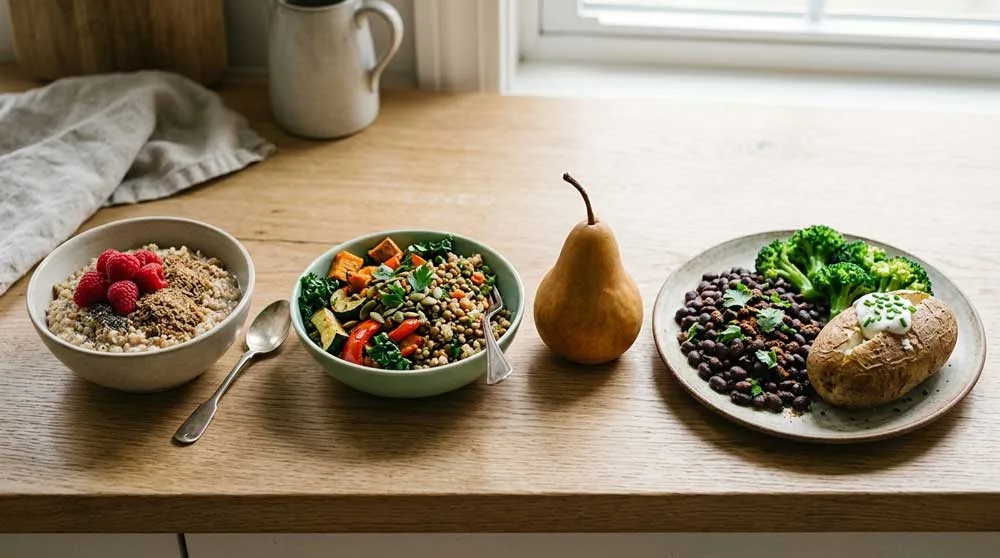
The figures below are rounded estimates. They are intended to show how portions contribute to the total, not to replace a product's Nutrition Facts label.
| Meal | Food and practical portion | Approx. fiber |
|---|---|---|
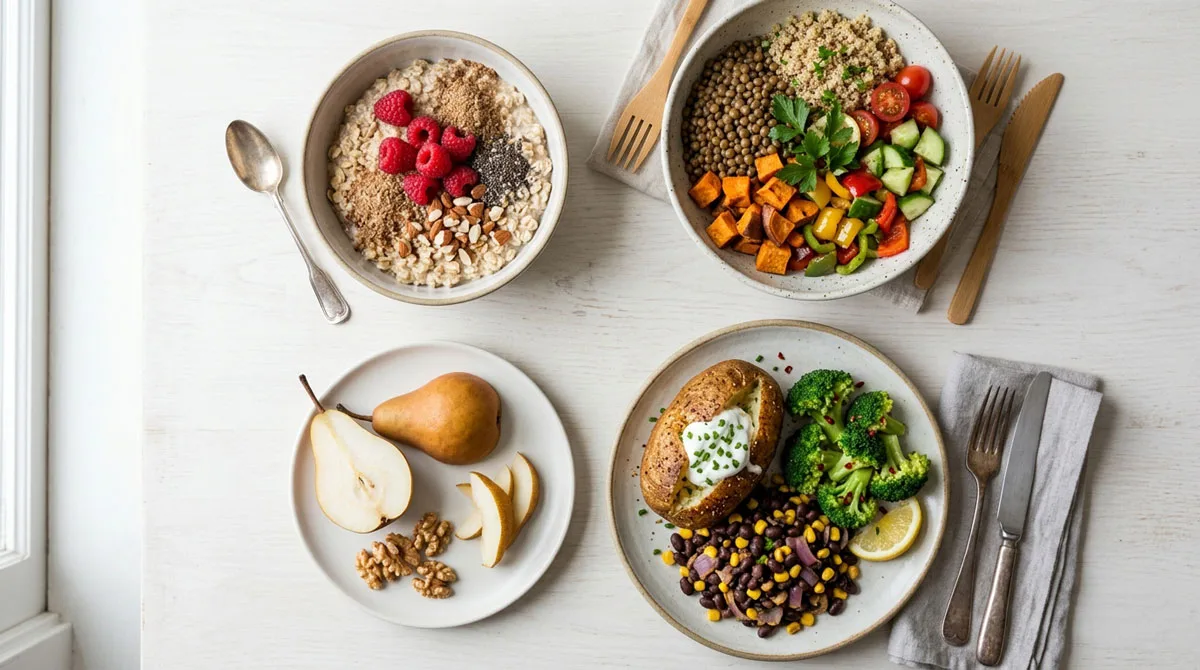
| Breakfast | Oatmeal: 1/2 cup dry oats, 1 cup raspberries, 1 tbsp ground flaxseed | 11 g |
| Lunch | Lentil bowl: 3/4 cup cooked lentils, 1/2 cup cooked quinoa, 1 cup chopped vegetables | 13 g |
| Snack | 1 medium pear with skin | 5–6 g |
| Dinner | 1/2 cup black beans, 1 medium baked potato with skin, 1 cup cooked broccoli | 11–12 g |
| Daily total | about 40 g |
This generous version goes above 30 grams. That is not a problem for everyone, but it may be too much if you are currently eating very little fiber. To make it closer to 30 grams, use 1/2 cup lentils at lunch and 1/2 medium potato at dinner, or choose one of the lower-fiber swaps below. The adjusted plan is approximately 30–33 grams:
| Meal | Adjusted portion | Approx. fiber |
|---|---|---|
| Breakfast | 1/2 cup dry oats, 1/2 cup raspberries, 1 tbsp ground flaxseed | 8–9 g |
| Lunch | 1/2 cup cooked lentils, 1/2 cup cooked quinoa, 1 cup vegetables | 9–10 g |
| Snack | 1 medium pear with skin | 5–6 g |
| Dinner | 1/2 cup black beans, 1/2 medium baked potato with skin, 1 cup cooked broccoli | 9–10 g |
| Daily total | about 31–35 g |
Breakfast: oatmeal with raspberries and flaxseed
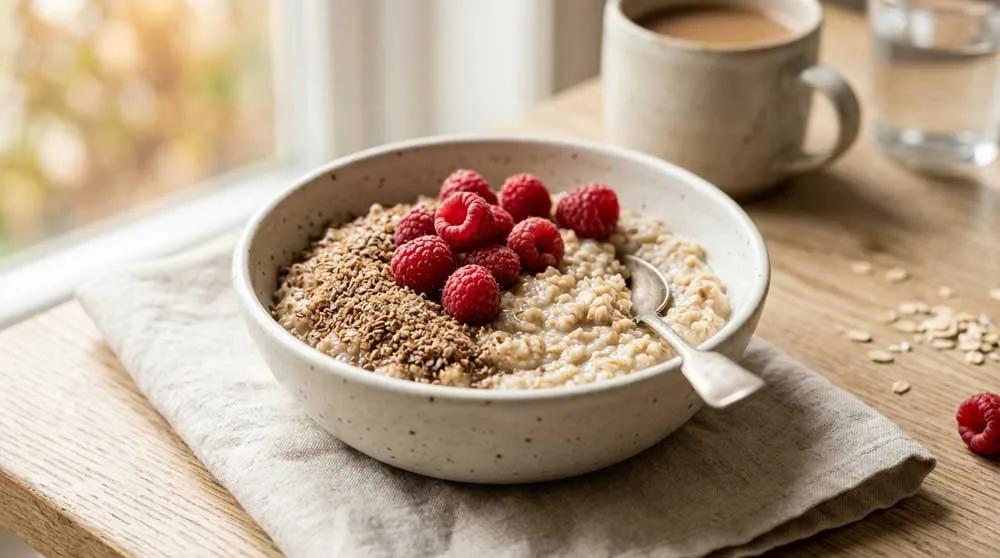
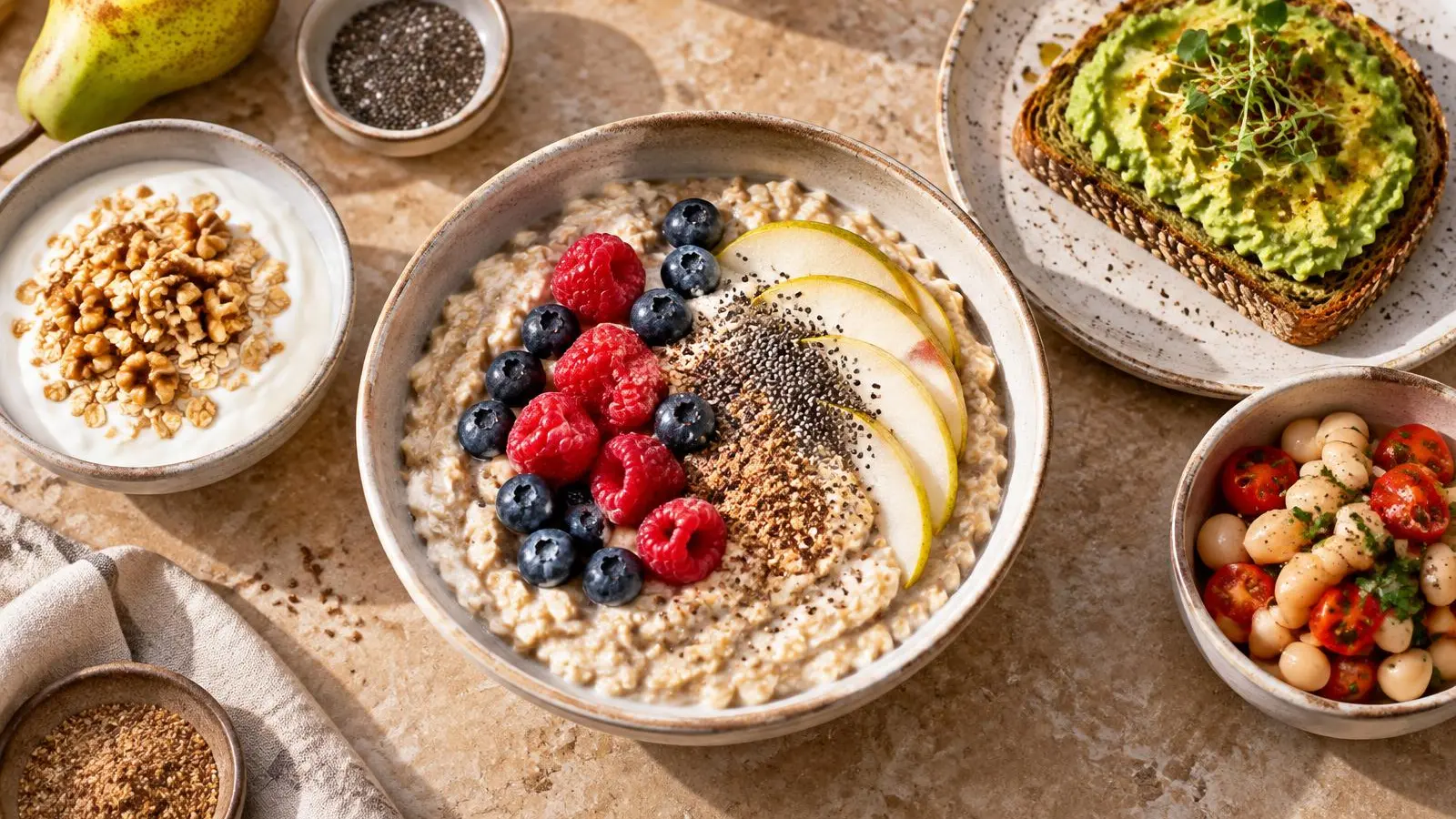
Cook 1/2 cup dry oats with milk, a fortified plant drink or water. Top with 1/2 cup raspberries and 1 tablespoon ground flaxseed. Oats provide soluble fiber, raspberries add fiber and flavor, and ground flaxseed is an easy way to increase the total in a small portion.
If this is a large change from your usual breakfast, begin with 1 teaspoon of flaxseed and 1/4 cup of berries. Add more over several days as tolerated.
Lunch: lentil, quinoa and vegetable bowl
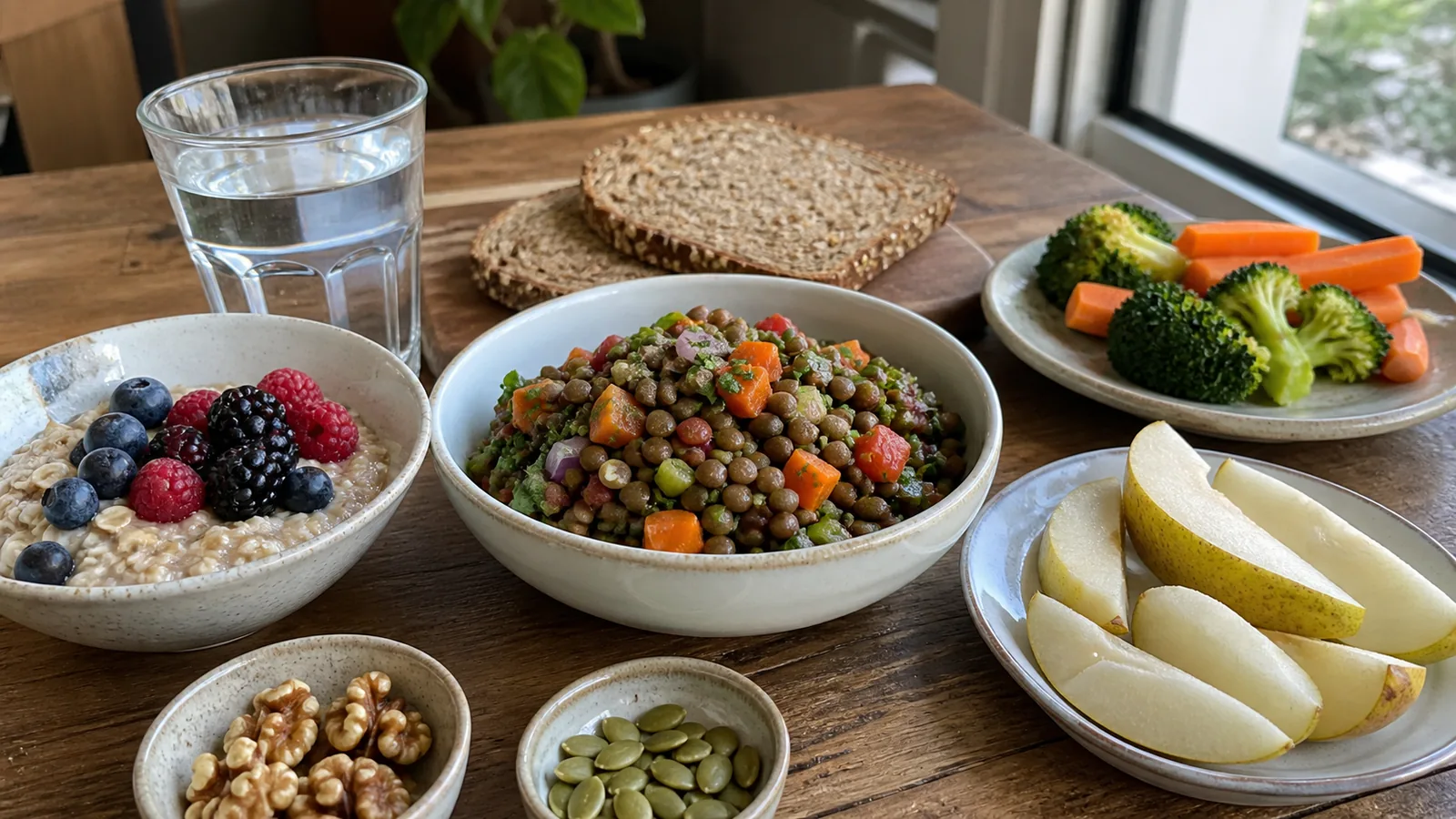
Combine 1/2 cup cooked lentils, 1/2 cup cooked quinoa and about 1 cup of chopped vegetables. Try tomatoes, peppers, cucumber, carrots or cooked courgette. Add olive oil, lemon and herbs. The lentils make the main contribution, while quinoa and vegetables add smaller amounts and make the meal more filling.
Rinsed canned lentils are a convenient option. If legumes usually cause discomfort, start with 1/4 cup and use extra cooked vegetables while your digestion adapts.
Snack: pear with skin
A medium pear contributes roughly 5–6 grams of fiber when the skin is included. Wash it well and keep the skin if it feels comfortable. An apple, orange or two kiwis can replace the pear, with the exact amount varying by size.
Dinner: black beans, potato and broccoli
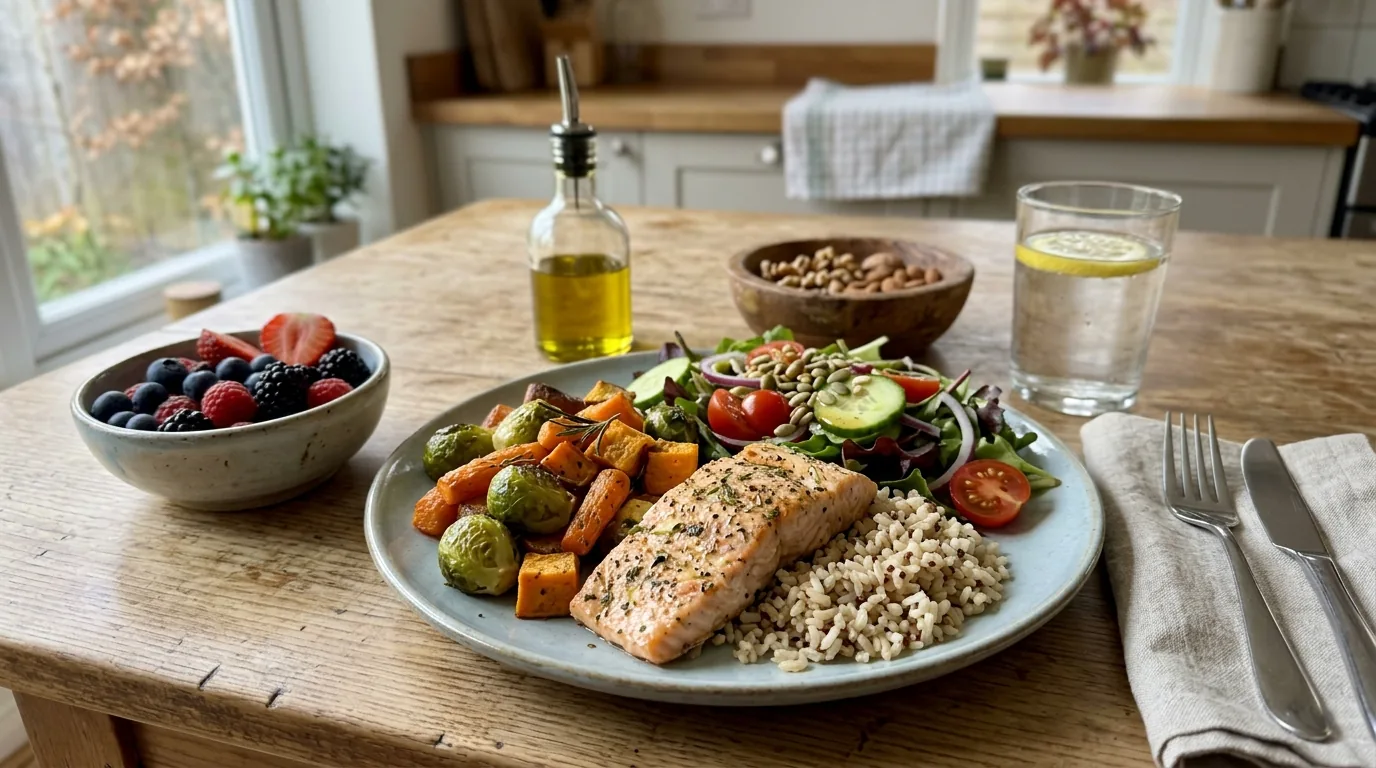
Serve 1/2 cup black beans with 1/2 medium baked potato and 1 cup cooked broccoli. Add a protein source that suits you, such as tofu, fish, eggs or yoghurt, because the fiber foods are only one part of a balanced meal. Keep the potato skin on after washing it thoroughly.
For a quicker dinner, use frozen broccoli and no-salt-added canned beans. Rinse canned beans to reduce some of the sodium.
How the plan reaches 30 grams
The point of a daily target is the pattern, not one perfect recipe. The adjusted plan distributes fiber across the day:
- Breakfast: oats, berries and flaxseed provide about 8–9 grams.
- Lunch: lentils, quinoa and vegetables provide about 9–10 grams.
- Snack: the pear provides about 5–6 grams.
- Dinner: beans, potato and broccoli provide about 9–10 grams.
Small changes can move the total up or down. A larger serving of lentils, an extra piece of fruit or a tablespoon of chia may add several grams. A peeled fruit, white bread or a smaller bean portion will provide less.
Easy substitutions
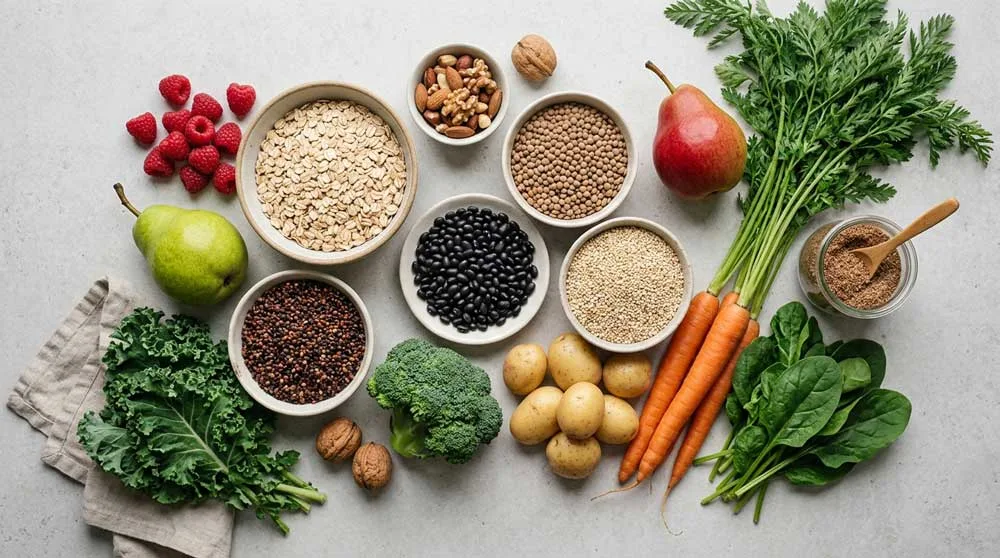
Use the option that fits your eating pattern and tolerance. Fiber values are approximate.
| Instead of | Try | Approx. fiber contribution |
|---|---|---|
| 1/2 cup raspberries | 1 small apple with skin | 3–4 g |
| 1 tbsp flaxseed | 1 tbsp chia seeds | 4–5 g |
| 1/2 cup lentils | 1/2 cup chickpeas or black beans | 6–8 g |
| 1/2 cup quinoa | 1 slice whole-grain bread | 2–4 g |
| Pear | 1 orange or 2 kiwis | 3–5 g |
| Potato | 1 cup cooked sweet potato | 4–6 g |
| Broccoli | 1 cup cooked Brussels sprouts or green peas | 4–9 g |
For a vegan plan, use a fortified plant drink and tofu, beans or tempeh as protein choices. For a gluten-free plan, choose certified gluten-free oats and replace bread or wheat-based products with potatoes, rice, quinoa or buckwheat. Check labels if you have coeliac disease or a diagnosed allergy.
A simple shopping list
One day does not require a long list. For several days of this plan, buy:
- oats and quinoa;
- dry or canned lentils and black beans;
- raspberries and pears;
- ground flaxseed;
- potatoes and broccoli;
- additional vegetables, herbs, lemons and a protein food.
Frozen berries and vegetables are practical choices and can reduce waste. Cook a batch of lentils, quinoa or potatoes ahead of time, then portion them into meals. Store cooked foods safely and follow the storage directions for the ingredients you use.
How to increase fiber comfortably
The target of 30 grams is useful as a planning reference, but reaching it overnight can cause gas, bloating or changes in bowel movements if your current diet is low in fiber.
- Start with one meal. Add fruit to breakfast or replace one refined grain with a whole-grain option.
- Increase portions in steps. Move from 1/4 cup beans to 1/2 cup before adding more.
- Spread fiber through the day. Several moderate servings are often more comfortable than one very large salad or bowl.
- Drink fluids regularly. Fiber absorbs water, but people with a fluid restriction should follow their clinician's advice.
- Try cooked foods first. Cooked vegetables and peeled fruit may be easier to tolerate than large portions of raw produce.
- Keep a short food-and-symptom note. It can help you identify whether a portion, ingredient or rapid increase is the issue.
Seek medical advice for persistent or severe abdominal pain, vomiting, blood in the stool, unexplained weight loss or a significant ongoing change in bowel habits. A diagnosed gastrointestinal condition may require an individualized fiber plan.
How much fiber do you need?
Fiber needs vary with age, sex, calorie needs, life stage and health. The U.S. Food and Drug Administration uses 28 grams per day as the Daily Value on food labels for a 2,000-calorie diet. A 30-gram target is therefore a practical round number for many adults, not a universal requirement.
The overall pattern matters more than hitting the exact number every day. Aim to include fruit or vegetables at meals, choose whole grains regularly and add legumes when they suit you.
Frequently asked questions
Is 30 grams of fiber a day too much?
For many adults, 30 grams is a reasonable general target. Tolerance depends on your current intake and health. Increase gradually rather than forcing a sudden change, and ask a clinician for personalized advice if you have a digestive disorder or fluid restriction.
How can I get 30 grams of fiber without beans?
Use oats, berries, pears, whole-grain bread, barley, potatoes with skin, vegetables, nuts and seeds. Without beans, you may need several different plant foods across the day to reach the same total.
Can I reach 30 grams of fiber on a low-carb diet?
It can be challenging but possible with non-starchy vegetables, berries, chia, flaxseed, avocado and nuts. Very restrictive plans may make a 30-gram target impractical, so discuss your goals with a qualified professional.
Do fiber supplements count toward 30 grams?
They can contribute fiber, but whole foods also provide vitamins, minerals and other compounds. Do not add a large dose suddenly, and check with a clinician or pharmacist if you take medicines or have a medical condition.
What if this plan makes me bloated?
Reduce the portions, pause at the amount you tolerate and increase more slowly. Beans, bran, large servings of seeds and some raw vegetables can be especially noticeable. Persistent symptoms deserve medical assessment rather than repeated dietary experimentation.
Final takeaway
Getting 30 grams of fiber a day is mainly a matter of distribution. Build meals around a few repeatable foods—oats, fruit, vegetables, whole grains, nuts, seeds and legumes—then adjust portions to your digestion. A steady pattern that you can maintain is more useful than a single very high-fiber day.
Sources reviewed
- U.S. Food and Drug Administration: How to Understand and Use the Nutrition Facts Label
- National Institute of Diabetes and Digestive and Kidney Diseases: Eating, Diet, and Nutrition for Constipation
- NHS: Good foods to help your digestion
- USDA FoodData Central