Walking for Weight Loss: How to Build a Routine You Can Keep
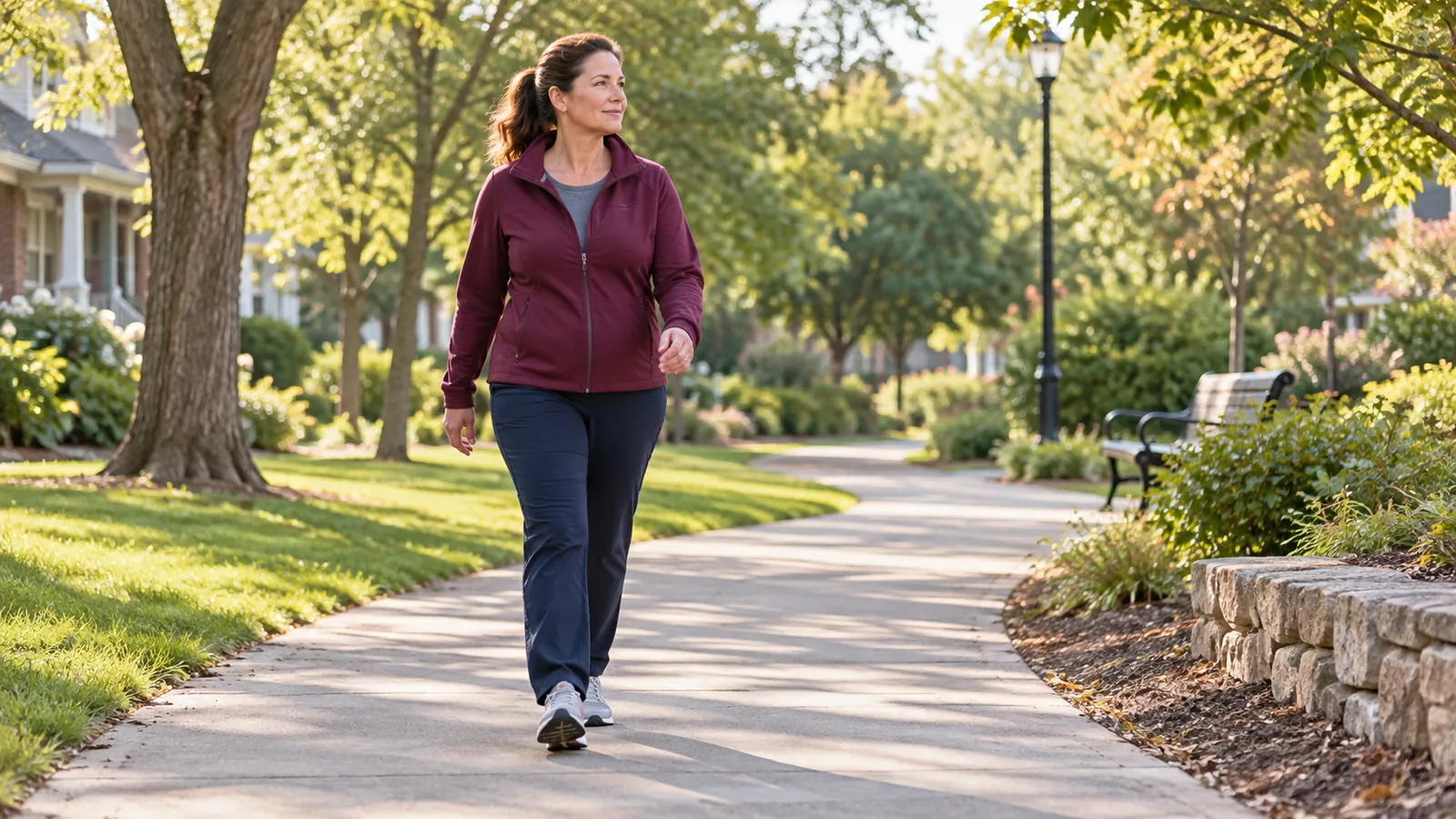
If an hour-long walk never fits your day, start by finding a smaller window you can actually use. A short neighborhood loop, part of a commute or a few minutes indoors can be the beginning of a routine.
Walking for weight loss can help you increase your regular activity, but no pace, duration or step count guarantees a particular result. Your overall eating pattern, activity, health and circumstances matter too. Walking can still improve fitness when the scale changes little.
This guide helps you choose a starting point, understand a useful walking intensity and build a plan around ordinary life. The aim is a routine you can return to, with enough flexibility for busy days and recovery.
Is walking enough for weight loss?
Walking uses energy and can become a substantial part of your activity when repeated regularly. The CDC’s guidance on activity and weight explains that the amount needed for weight management varies between people. A walking plan is therefore one part of the picture, rather than a calculation that guarantees pounds lost.
There is research specific to walking. A 2015 review of randomized walking interventions in previously inactive adults found improvements in fitness and modest average changes in weight and waist measures. Programs and study durations differed, and the evidence had limitations. An average across studies does not tell you what a particular daily route will do for you.
A larger 2024 review of 116 randomized trials included 6,880 adults with overweight or obesity. More weekly aerobic exercise was associated with greater average reductions in weight, waist circumference and body fat. These were supervised programs using different kinds of aerobic exercise, with varying dietary protocols. It was not a walking-only review, and its results cannot predict your weight change from an extra few minutes outdoors.
Use this evidence to make room for regular activity, without turning a walk into a test you pass only if your weight falls. Being able to walk a familiar route more comfortably is useful progress in its own right.
How long should you walk for weight loss?
Separate a general health guideline from your personal starting point. CDC guidance for adults includes at least 150 minutes of moderate-intensity aerobic activity per week, plus muscle-strengthening activity for all major muscle groups on at least two days. Brisk walking can contribute to the aerobic part.
Thirty minutes of moderate-intensity walking on five days adds up to 150 minutes. You can also split the activity into shorter periods. This is an example of organizing the health guideline, not a beginner prescription or a threshold at which weight loss is guaranteed.
If that amount is far beyond what you currently do, begin with less. A comfortable five-minute walk can be a useful first step. The Physical Activity Guidelines for Americans count moderate-to-vigorous activity of any duration toward the total; there is no requirement for every period to last ten minutes.
Intensity still matters when adding up the aerobic guideline. A slow warm-up or a relaxed stroll may be lighter than moderate activity. Those minutes can still be part of your day, but do not automatically label the entire time outside as moderate-intensity exercise.
Choose your walking pace with the talk test
You do not need everyone else’s treadmill speed. The CDC’s talk test offers a practical way to judge effort: at moderate intensity, you can talk but would find it difficult to sing. If you can only manage a few words before pausing for breath, the activity is more vigorous.
Start comfortably and give yourself time to settle into the walk. When appropriate for your fitness and health, increase your pace a little and check how conversation feels. A pace that is brisk for you may be slower than someone else’s; that does not make it less valid.

Hills, heat, surface and tiredness can change how hard a familiar route feels. Use that information to adjust, rather than trying to hold the same pace in every setting. A slower return home or an easier day can be part of a sensible routine.
How many steps a day do you need for weight loss?
A step counter can help you notice your usual pattern. It cannot identify a universal number that guarantees weight loss. The federal activity guidelines discuss step tracking as a way to follow progress and explicitly distinguish popular 10,000-step advice from the guidelines themselves.
If steps are useful to you, first notice several ordinary days. Then choose a small, realistic change from that starting point. Alternatively, record time and how the walk felt. You do not have to replace a workable time-based routine with a daily number.
Two days with the same step count can involve different amounts of brisk walking. Steps around the house, a purposeful outdoor walk and slow shopping all contribute movement, but the total alone does not describe intensity. Keep the tracking method simple enough to help rather than dominate the day.
A flexible walking plan for weight loss
Choose your entry point from what you can comfortably do now. The NIDDK guide to staying active supports starting with manageable amounts and increasing gradually. You do not need to begin at somebody else’s daily distance.
These are illustrative starting options, not a tested weight-loss program or a personal exercise prescription.
| Your starting point | An option to try | What to review |
|---|---|---|
| You have been mostly inactive | Try a comfortable 5–10-minute route on three days you choose, if that is manageable. | Comfort during the walk and recovery afterward; a shorter route is also an option. |
| You already walk comfortably for about 20 minutes | Keep a familiar duration and make regular windows for it before adding more. | Whether the schedule fits your week and whether the effort is appropriate. |
| You comfortably sustain moderate walking | For example, five 30-minute moderate periods total 150 minutes in a week. | This organizes the adult health guideline; it does not predict weight loss. |
For someone who finds ten minutes comfortable, an example starting week could be a ten-minute loop on Monday, Wednesday and Saturday. That is 30 minutes of walking across the week, not a claim that the adult activity guideline has been met. The first task is to find out whether those windows work.
Once your usual amount feels manageable, change one thing at a time. You might extend one walk slightly or add another day. Later, if appropriate, include a few more purposeful sections. You can remain at the same stage longer; there is no compulsory weekly increase.
Begin and finish at an easier pace. Avoid raising duration, speed and hills together simply because the first few outings felt good. If your feet or joints are uncomfortable, review the route, shoes and load rather than treating pain as proof of effort.
Make the walking routine fit your day
Choose a repeatable opening: after finishing work, during a break or while running a nearby errand on foot. Decide where you will go and where the route ends. A short loop with an easy way back can be more practical than a destination that leaves you tired and far from home.
The NIDDK’s advice on starting activity includes choosing something you enjoy, setting a specific goal and putting it in your schedule. Turn “walk more” into something observable, such as “use my short route on the three days I work from home.”
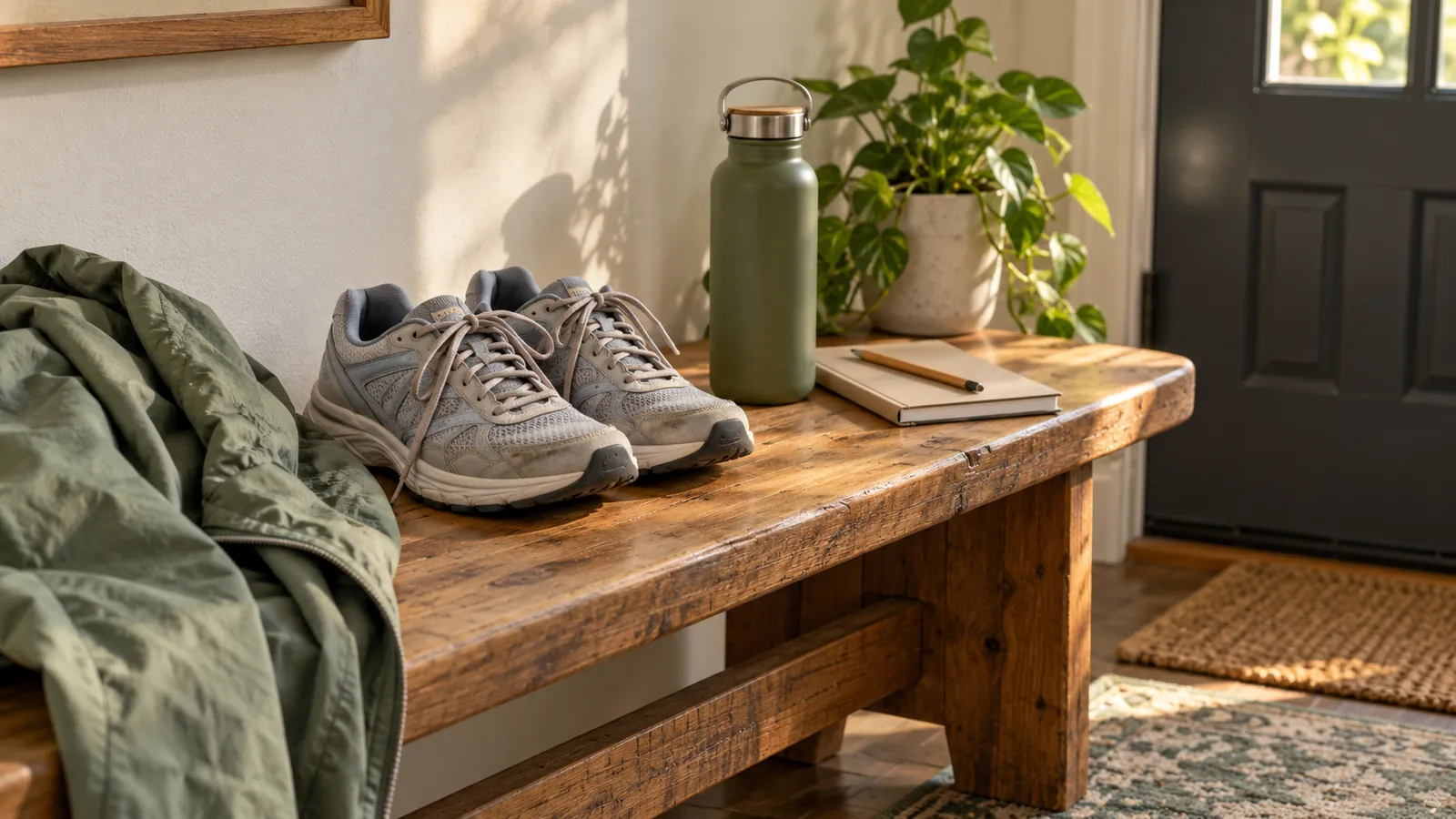
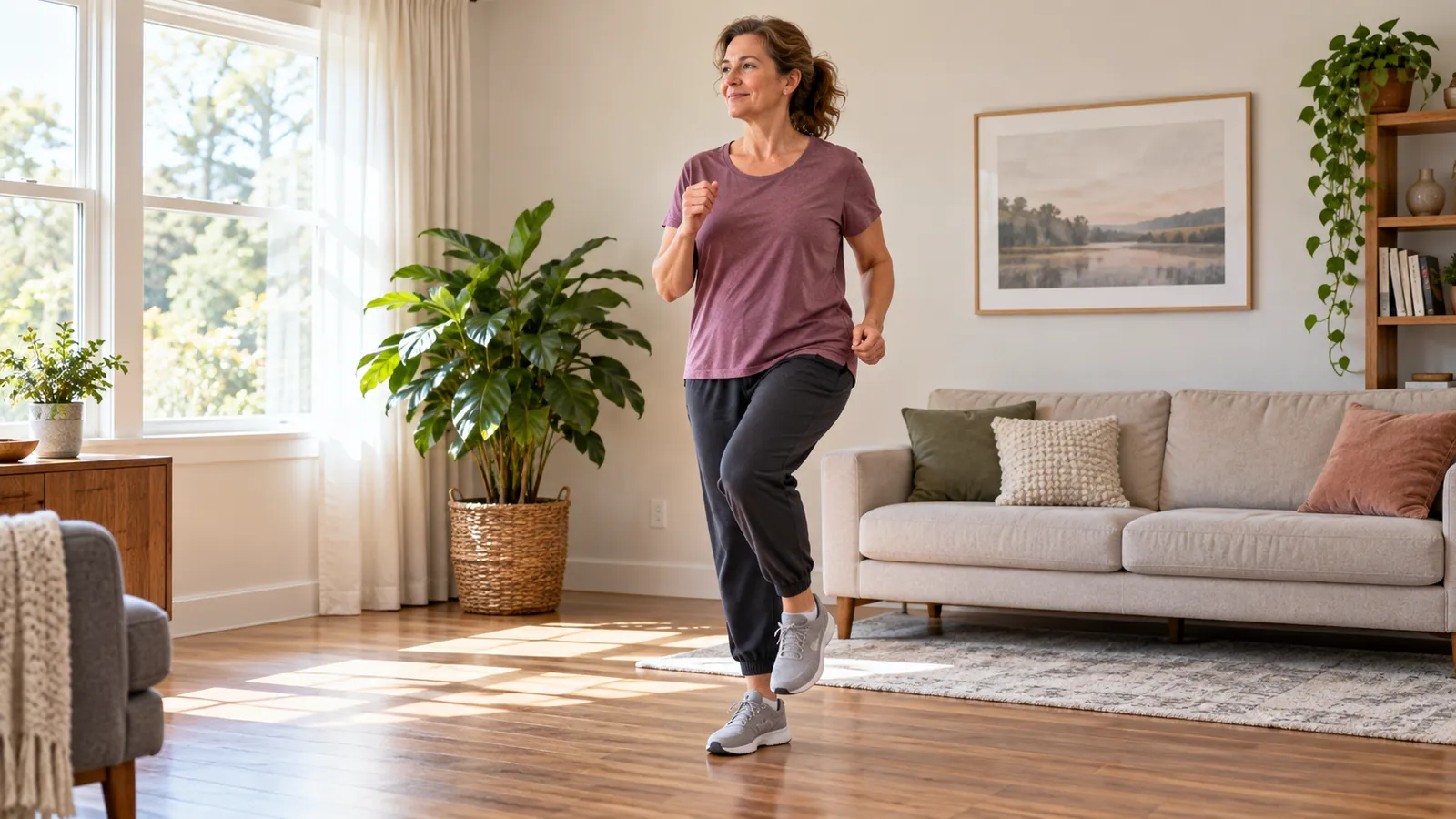
Have a backup for rain, heat, ice or a dark evening. A suitable indoor corridor, a clear space for walking in place or an accessible indoor venue may offer an alternative. Check the surface and your surroundings, and adapt the pace to the space.
If you enjoy following music and simple movement sequences, the dopamine steps guide explains that style of walking workout and the limits of its claims. If your main question is timing around a meal, use the separate walking after eating guide. Neither needs to become a rule for every walk.
Support walking with meals, strength and recovery
A walking routine does not remove the need to eat adequately. Plan meals you can prepare or obtain on busy days, and notice whether hunger or tiredness is making the routine harder. The healthy eating guide offers practical ideas without prescribing a special walking diet.
For weight change, the relationship between intake and total expenditure matters over time. The calorie deficit guide explains the calculation and its uncertainty. Avoid treating a watch’s estimated calories as a precise amount to subtract from a meal or a debt you must work off.
Walking also does not replace every kind of activity. Keep the adult guidance on muscle-strengthening in view and choose work suited to your ability, with advice if you need help getting started. Allow room for easier days and recovery instead of making every session longer.
Follow progress beyond the scale
A simple note can tell you more about the routine than a long dashboard. Record whether you walked, roughly how long, how conversation felt and whether you were comfortable afterward. For example: “Tuesday: 15 minutes, conversation possible, feet comfortable.” This describes an outing; it is not a calorie calculation.
Notice practical changes: you needed fewer stops on the same route, the chosen time became easier to protect, or you found an indoor alternative that worked. These observations help you decide what to repeat and what to change.
If monitoring weight is appropriate for you, look at a longer trend under similar conditions. One walk should not be judged by the next weigh-in. If a previously falling trend has flattened, the weight loss plateau guide covers that separate review.
Missing a day does not create a session you have to repay. Return to a manageable amount and consider what got in the way. A plan that needs a smaller window is giving you useful information about the schedule.
When to adjust the plan or seek personal support
Choose comfortable shoes and a route with a suitable surface, lighting and places to stop. The NIDDK’s activity guidance also discusses adapting movement to your health and ability. If a health condition, disability, recent injury, surgery or treatment affects activity, ask a qualified professional what starting point and progression make sense for you.
Do not try to walk through persistent joint or foot pain. Shorten or stop the activity and seek advice when pain persists or changes how you move. New symptoms deserve attention rather than a stricter step target.
Stop exercising and seek immediate medical help for concerning symptoms such as chest pain or pressure, extreme breathlessness or dizziness. A general walking plan is not a way to assess those symptoms.
If exercise becomes a way to compensate for eating, or missing a walk causes distress that controls your day, discuss the pattern with a qualified professional. The routine should support ordinary life, with room for meals, rest and changes in plans.
For your next step, choose one safe route or indoor option, one manageable window and one way to notice how it feels. You can build from something you can repeat.
Frequently asked questions
Is walking enough for weight loss?
Walking can contribute to weight management, but it does not guarantee weight loss by itself. The outcome depends on your overall activity, food intake, health and circumstances. It can improve fitness even when weight stays similar. Choose a routine you can sustain and review the whole picture rather than expecting each walk to produce a lower number on the scale.
How long should you walk for weight loss?
There is no duration that guarantees weight loss for everyone. General adult health guidance includes at least 150 minutes of moderate-intensity aerobic activity each week, plus muscle-strengthening activity on at least two days. If you are inactive, start with a smaller comfortable amount and build gradually. Count the moderate-intensity portions toward the aerobic guideline; a gentle warm-up may be lighter.
How many steps a day do you need for weight loss?
There is no universal step target that guarantees weight loss. Ten thousand steps is not a compulsory federal activity guideline. Your usual movement, walking duration, intensity and ability all matter. A step counter can show your own pattern, but it does not replace a personal assessment or tell you exactly how much weight you will lose.
Does walking indoors count?
Yes. Walking in a suitable indoor space or walking in place can add movement to your day. Its contribution to moderate-intensity activity depends on how hard you are working, not on whether you are outside. Choose a clear, safe surface and adapt the duration and pace to your comfort. An indoor session does not need to reproduce an outdoor route exactly to be useful.
How soon will I lose weight from walking?
A walking schedule cannot predict an individual weight-loss timeline. Changes in food intake, total activity, health, water and other factors affect the trend. First look at whether the routine is repeatable, how the walk feels and whether you recover comfortably. If a previously falling weight trend has flattened, review the broader plan instead of automatically adding more walking.
Sources
- CDC: Physical Activity and Your Weight and Health
- CDC: Adult Activity — An Overview
- CDC: Measuring Physical Activity Intensity
- U.S. Department of Health and Human Services: Physical Activity Guidelines for Americans, second edition (PDF)
- NIDDK: Staying Active at Any Size
- NIDDK: Tips for Starting Physical Activity
- Murtagh and colleagues: The effect of walking on risk factors for cardiovascular disease — an updated systematic review and meta-analysis of randomized control trials (author-hosted PDF)
- Jayedi and colleagues, JAMA Network Open: Aerobic Exercise and Weight Loss in Adults — a systematic review and dose-response meta-analysis