How to Lose Belly Fat: What Helps and What Does Not
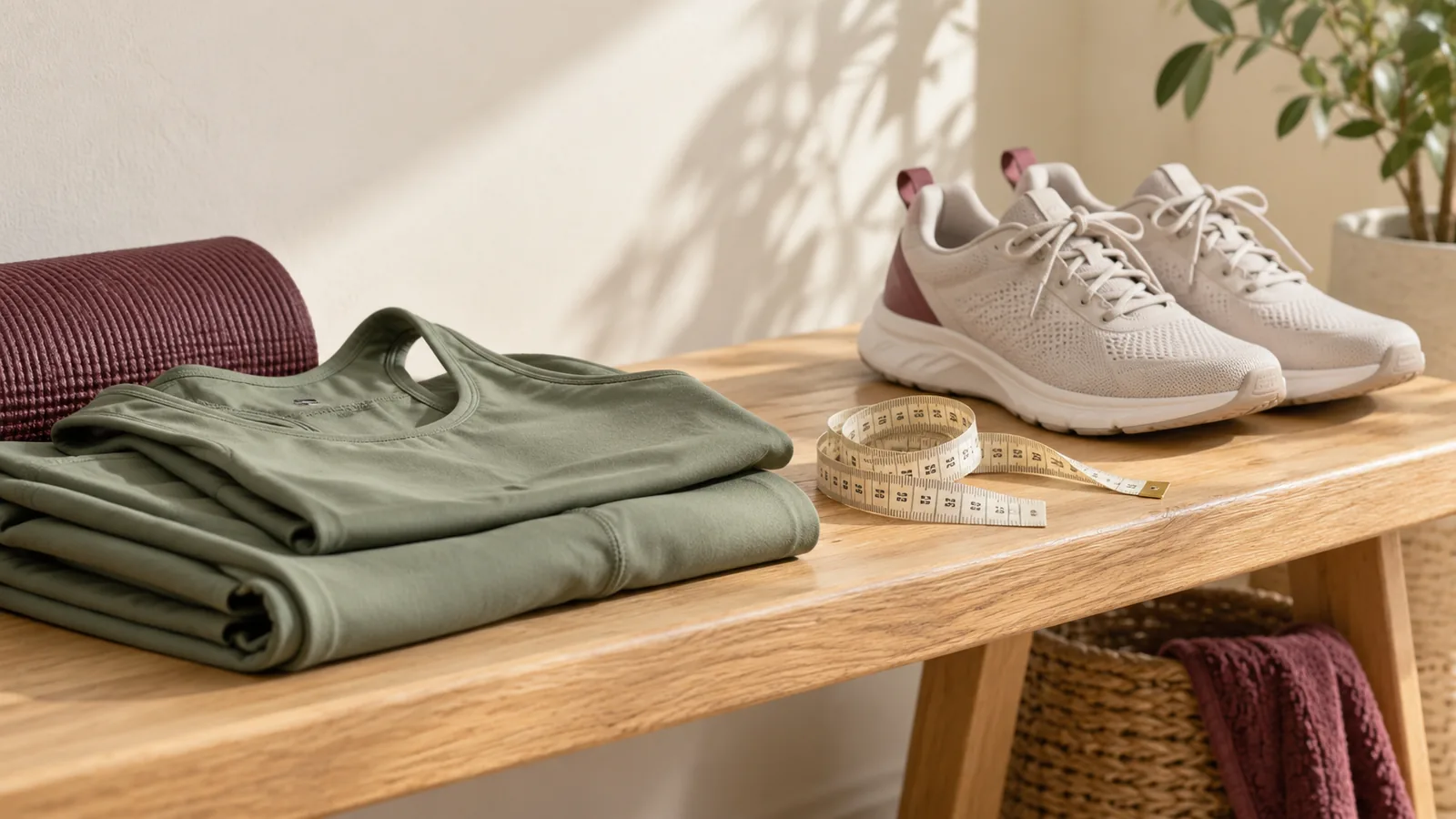
A drawer full of workout clothes, a saved ab routine and a tape measure can leave you with one practical question: which of these will actually help? Learning how to lose belly fat starts with overall fat loss and sustainable habits. Abdominal exercises can strengthen your core, but they cannot reliably select the place your body loses fat.
A useful plan includes satisfying meals, whole-body activity, strength work and room for sleep. First, though, separate abdominal fat from temporary bloating, and decide whether weight loss is an appropriate goal for you. A flat stomach is not a requirement for health.
This guide explains what the evidence can tell you, how to make ordinary choices easier and how to follow progress without turning every meal or measurement into a test.
Belly fat, visceral fat and bloating are different things
“Belly fat” is an everyday description, not a measurement of one tissue. Subcutaneous fat sits beneath the skin. Visceral fat sits deeper in the abdomen, around internal organs. Both can contribute to waist size, and a mirror cannot tell you their proportions.
Visceral fat matters because of its relationship with metabolic and cardiovascular health. NHLBI's guidance on weight assessment explains why waist circumference can add information alongside body mass index. Neither gives a complete individual diagnosis. Pinching your waist or comparing your shape with a photograph cannot measure the fat around your organs.
Bloating is a separate issue. Gas, constipation and changes around a menstrual period can make the abdomen feel fuller or look larger. The NHS guide to bloating describes these common possibilities. A change between breakfast and bedtime does not, by itself, show that you gained abdominal fat that day.
This distinction changes the next step. Repeatedly adding ab workouts will not explain persistent digestive symptoms. Equally, a temporary reduction in fullness after a bowel movement does not establish fat loss. If you are searching for how to lose lower belly fat, start by recognizing that lower-abdominal shape alone cannot tell you what needs attention.
Can you target belly fat with exercises?
A plank can train your abdominal muscles. That does not make it a dependable way to remove the fat over those muscles. The practical evidence does not support choosing an ab routine as your main strategy for losing belly fat.
In a six-week study of 24 sedentary adults, abdominal exercises improved muscular endurance without a significant reduction in abdominal fat or circumference. It was a small study, but it illustrates the difference between training a muscle and changing the fat in the same area.
Research is not completely uniform. A small trial involving 16 men found greater trunk-fat reduction with a specialized abdominal-endurance and treadmill program. It measured the trunk, which includes more than the belly, rather than visceral fat separately. Diet was not controlled, and the demanding protocol does not establish that a short home ab routine will selectively reduce waist fat.
For everyday decisions, keep core work for strength and function. Build the wider routine around activities you can repeat. “Best exercises to lose belly fat” lists become more useful when they include walking or another aerobic activity and strength exercises for the whole body, without promising a particular shape.
Food habits that make a plan practical
Overall fat loss generally requires taking in less energy than your body uses over time. The NIH overview of weight management places eating within a broader picture that includes activity, genetics, health and access to care. There is no single calorie target that fits everyone reading this page.
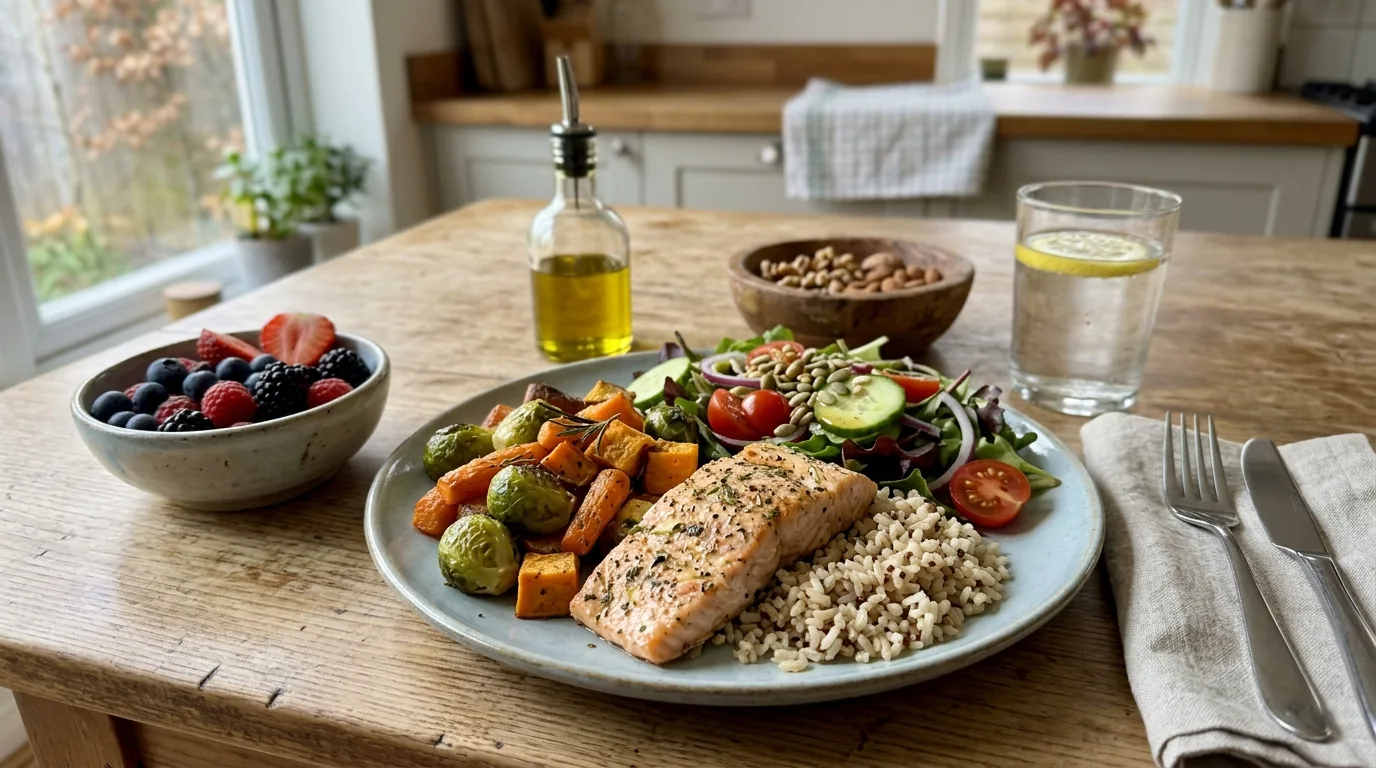
Begin with a meal you eat often. A lunch of chicken, tofu or beans, vegetables and rice can be adjusted to your appetite, budget and preferences. So can eggs on whole-grain toast with fruit. These are ordinary meal examples; neither needs a special ingredient to become useful.
Make the practical decision before the hungry moment. If lunch is always rushed, keep a few ingredients ready: a can of beans, frozen vegetables, leftover rice or bread, and a protein food you enjoy. If cooking every day is unrealistic, plan for leftovers or a convenient supermarket meal.
| Situation | A useful option to try | Keep in mind |
|---|---|---|
| Breakfast is only coffee | Try yogurt and oats, eggs and toast, or another breakfast you enjoy. | Choose a meal that fits your morning; breakfast is not compulsory for fat loss. |
| Lunch leaves you searching for food soon afterward | Add a protein food, vegetables or fruit, and a satisfying carbohydrate. | Review whether the whole meal is adequate before making it smaller. |
| Sweetened drinks are an everyday habit | Replace one with water, sparkling water or an unsweetened drink you like. | A specific swap is easier to repeat than a rule banning every enjoyable drink. |
| Takeout is the workable dinner | Choose a meal you enjoy, add vegetables if available and decide on a comfortable portion. | You can save leftovers; dinner does not need to be a perfect homemade plate. |
| A plan excludes most familiar foods | Rebuild it around meals that fit your household and culture. | A plan needs to work on ordinary days, including busy ones. |
Portions still matter, including for nutritious foods. You can serve nuts in a bowl or measure oil during cooking if that helps you understand what you use. This does not turn either food into something to fear. If you are unsure how much you need, a registered dietitian can help you build a personal plan.
For more meal ideas, use the healthy eating guide. Choose one useful change before attempting a complete kitchen overhaul.

Skip the fat-burning food hunt
A tea, juice or spice does not give you control over where fat is lost. NCCIH finds no compelling evidence for detox diets as a lasting weight-management strategy, and some cleansing practices can cause harm. A brief change on the scale after severe restriction or a laxative is not proof that a product removed belly fat.
Use whole-body activity and strength work
The best starting activity is one you can do safely and return to. Brisk walking, cycling, swimming or dancing may fit different lives better than a demanding “belly burner” workout. You can also move in shorter periods instead of waiting for an uninterrupted hour.
The CDC's general adult activity guidance recommends at least 150 minutes of moderate-intensity activity a week, or 75 minutes of vigorous activity, or an equivalent combination. It also recommends muscle-strengthening activity for all major muscle groups on at least two days a week. These are health guidelines, not a dose guaranteed to remove abdominal fat.
If you are currently inactive, build gradually from what is comfortable. You do not need to reach the full guideline immediately to begin gaining health benefits. Ask for guidance if pain, a health condition or uncertainty about safe exercise makes it hard to start.
Keep more than your abs in the strength plan
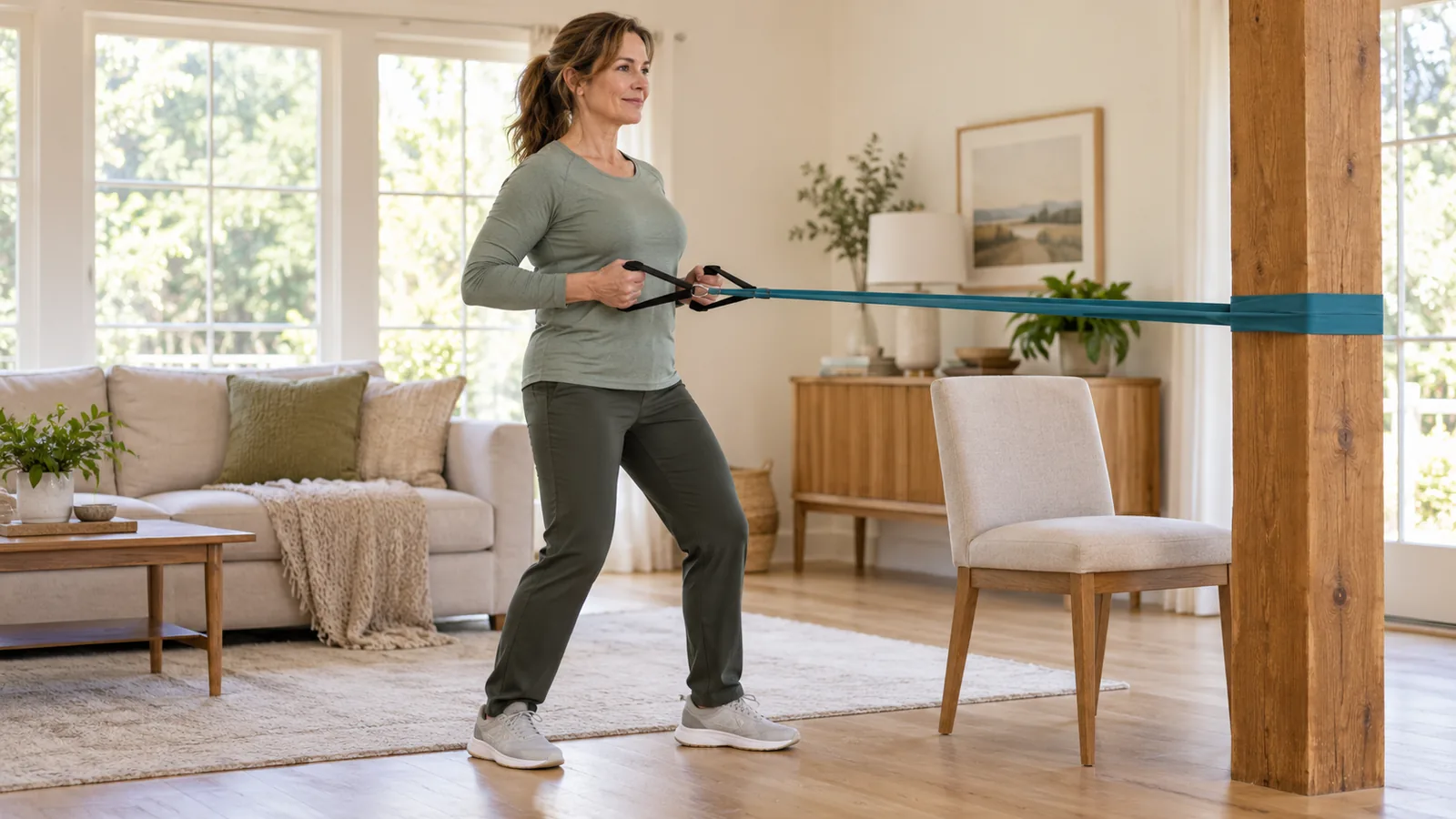
A balanced session might involve a suitable squat or chair stand, a row, a pushing movement and a core exercise. The specific movements and resistance should match your ability. A trainer or physical therapist can help adapt them; a picture of someone else's workout is not an individual prescription.
For example, put your equipment where you will use it and reserve a realistic time in the week. A short session you can repeat may be more workable than a long routine that keeps getting postponed. Core work can sit within that plan without becoming the entire plan.
The scale does not capture every exercise benefit
In a randomized trial involving 54 premenopausal women, supervised exercise reduced abdominal and visceral fat even in a group without weight loss. The program was intensive, and the findings do not predict an individual's result. They show why an unchanged scale is not enough to conclude that activity has done nothing.
Walking can be part of the routine without a special fat-burning time of day. If a meal is a convenient cue, see the separate guide to walking after eating. Choose the timing that helps you keep going.
Make room for sleep and a workable routine
Sleep belongs in a weight-management plan, as the NIH overview explains. It is not a way to selectively burn abdominal fat. Avoid promises that a bedtime trick will “reset cortisol” or flatten your stomach.
Look at one practical obstacle: late work, a phone that keeps you awake or mornings with no food ready. You might prepare breakfast before bed, choose a wind-down cue or move an evening workout earlier if that suits you. Pick the change that addresses your actual circumstances.
Shift work, caregiving and illness can limit your options. On difficult weeks, simplify meals and activity expectations. A routine should leave space for recovery and ordinary life.

Follow progress without setting a belly-fat deadline
There is no dependable answer to how long it takes to lose belly fat for a particular person. A challenge promising a smaller waist in a week cannot account for your starting point, health or the way your body responds.
If measuring your waist is useful, use a flexible tape just above the hipbones while standing. Keep it level, breathe out normally and measure without pulling it tightly into the skin. Repeat under similar conditions. This follows the NIH measurement method; it is a screening measure, not a home test of visceral fat.
Choose a reasonable review interval that avoids reacting to every fluctuation. Note whether the same walk feels easier, whether you are becoming stronger and whether the routine fits your week. These observations help you evaluate the plan, although they do not calculate how much abdominal fat you have lost.
You can also choose not to measure. If waist checks or photos create distress or increasingly strict food rules, use other goals with professional support. If the broader weight trend has stalled after previous loss, the weight loss plateau guide addresses that separate question.
A manageable starting plan
- Choose one meal to make easier. Write down two workable options and buy the ingredients. Include a backup for the day your schedule changes.
- Put movement in the calendar. Choose an activity and a starting amount you can comfortably manage. Plan suitable strength work alongside it.
- Remove one obstacle. Put walking shoes by the door, prepare tomorrow's lunch or protect a wind-down period.
- Review the routine. Ask what you repeated, what felt difficult and what needs adapting. Do this before adding more rules.
A useful first result is a routine you can actually follow. You do not need to turn every choice into an optimization project or earn food through exercise. Build from the habits that work in your life.
When to ask for personal advice
Ask a clinician or registered dietitian whether fat loss is an appropriate goal if you are unsure, have a medical condition, take medicines that affect weight or have a history of disordered eating. Pregnancy and postpartum recovery also need advice suited to that stage rather than a generic waist-loss plan.
Persistent or frequent bloating, unexplained abdominal enlargement, blood in the stool or unintentional weight loss deserve medical assessment. Seek emergency medical care for sudden severe abdominal pain, vomiting blood or severe breathing difficulty. These symptoms call for assessment rather than a stricter food or exercise routine.
Frequently asked questions
Can you target belly fat with exercises?
Abdominal exercises strengthen your core, but they are not a reliable way to choose where you lose fat. Research on localized fat loss has mixed findings from small, specific exercise studies. Build a routine with whole-body aerobic activity and strength work, and include core exercises for their strength benefits rather than a promised change in one area.
What foods burn belly fat?
No particular food is a proven shortcut to selectively burning belly fat. You can build useful meals from vegetables, fruit, beans, whole grains and protein foods without buying special products. The overall eating pattern, portions and what you can sustain matter more than adding a supposed fat-burning ingredient. Detox teas and cleanses are not an evidence-based solution.
Does walking help reduce belly fat?
Walking can contribute to overall activity and weight management, and brisk walking counts toward moderate-intensity activity. It cannot promise fat loss from your abdomen or a set change in your waist. Choose a pace and duration that fit your current ability, build gradually and combine walking with suitable strength activity and sustainable eating habits.
How long does it take to lose belly fat?
There is no reliable timetable for an individual. Starting body composition, health, eating, activity and other circumstances affect the response, and you cannot choose which area changes first. Follow longer-term changes under comparable conditions and notice strength and fitness too. Avoid treating a short challenge or a photo deadline as a test your body must pass.
Is lower-belly fullness always fat?
No. The shape of your lower abdomen can reflect fat as well as bloating and the contents of your digestive tract. Gas, constipation and menstrual changes may contribute to temporary fullness. Appearance alone cannot identify the cause or measure visceral fat. Get medical advice for persistent or frequent bloating, unexplained enlargement or other new symptoms.
Sources
- NIH: Overweight and Obesity in Adults
- NHLBI: Overweight and Obesity — Symptoms and Diagnosis
- NHS: Bloating
- Vispute et al.: The effect of abdominal exercise on abdominal fat
- Brobakken et al.: Abdominal aerobic endurance exercise reveals spot reduction exists — a randomized controlled trial
- Ross et al.: Exercise-Induced Reduction in Obesity and Insulin Resistance in Women — a Randomized Controlled Trial
- CDC: Adult Activity — An Overview
- NCCIH: Detoxes and Cleanses — What You Need To Know