Weight Loss Plateau: Why Your Weight Has Stalled and What to Do Next
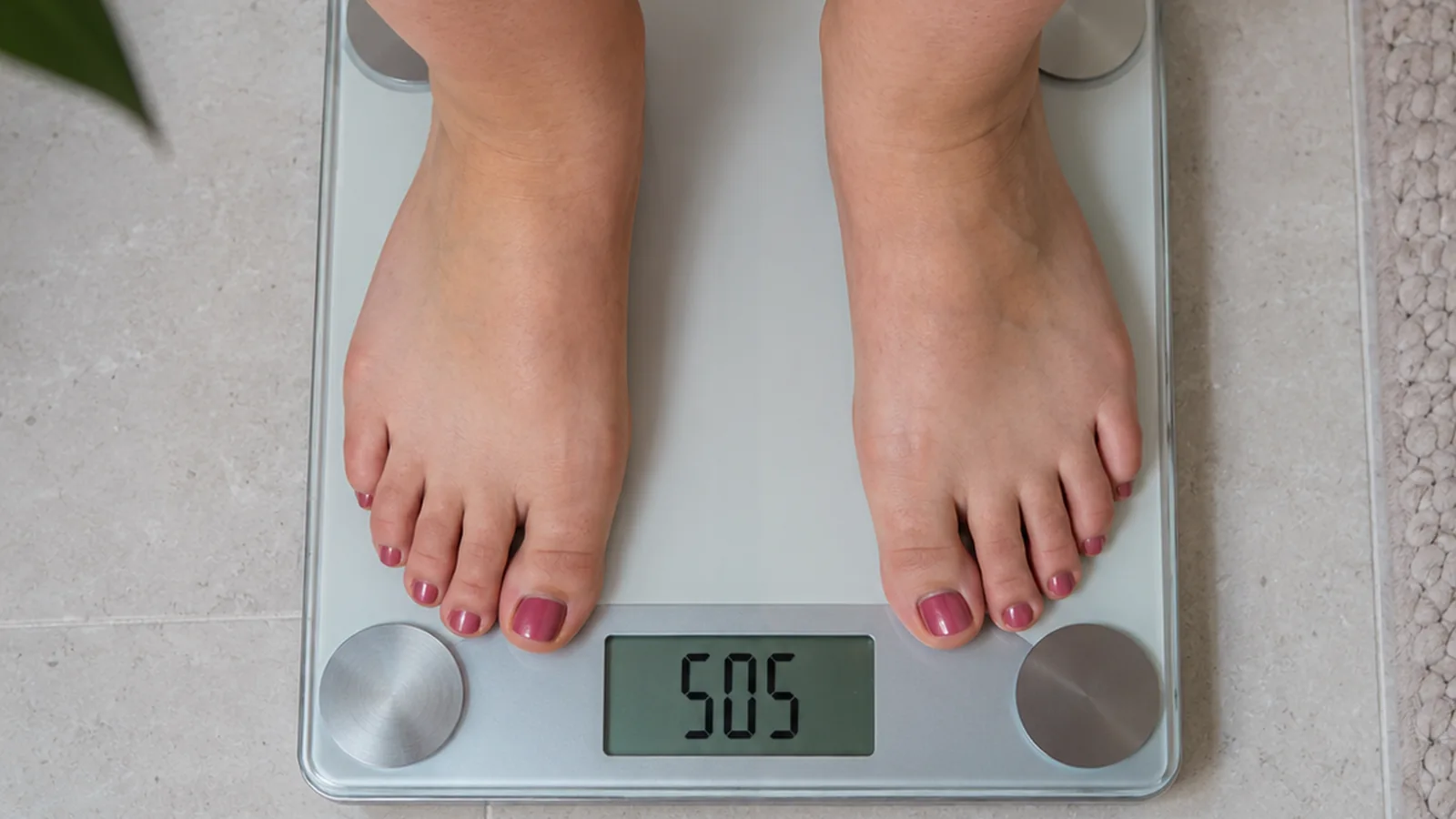
A weight loss plateau is a flattening of a previously downward weight trend. It can happen as your body's energy needs, appetite and everyday routine change. A few unchanged weigh-ins, however, do not tell you whether fat loss has stopped.
If your weight loss has stalled, start by checking the trend and what has changed in your life. Then choose a manageable adjustment, or ask for help reviewing the plan. Making meals smaller and workouts harder is not an automatic next step.
Perhaps the same breakfast, lunch and evening walk seemed to work at first, but now the number looks familiar every week. That is a reason to reassess, not a verdict on your effort. This guide helps you decide what to look at first.
What counts as a weight loss plateau?
A plateau describes a trend that has become broadly flat after weight was falling. It is not a diagnosis made after a fixed number of days, and a lower reading followed by a higher one is not enough to establish it. You need comparable measurements and some context.
The scale measures your whole body, including water and the contents of your digestive tract. In a small study of short-term weight changes, much of the variation over two weeks involved water and other components of fat-free mass. The participants were not following a weight-loss program, so the findings cannot tell you exactly what caused your own change.
Menstrual-cycle changes can add another layer. A study following 42 women across one cycle found changes in weight associated with extracellular water. The timing and size of a change vary between people; there is no standard amount to subtract from a reading.
For example, a morning measurement before breakfast and an evening measurement after dinner are not a useful test of whether your plan is working. Nor should one unusually low reading become the number every later measurement must beat.
Make the comparison fair
If weighing is useful for you, use the same scale on a firm, level floor, at a similar time of day and in similar clothing. NHS England's weighing guidance suggests regular weekly to monthly intervals. You do not need to weigh yourself several times a day.
Look across your record rather than reacting to one entry. Alongside weight, note things that matter to your goal: whether walks feel easier, whether you can lift more comfortably, and whether meals leave you adequately nourished. These are useful observations, although they do not prove a particular amount of fat loss. If weighing increases anxiety or drives restrictive behavior, discuss another way to follow progress with a professional.
Why has my weight loss stopped?
A smaller body can need less energy
The energy needed to maintain and move your body can fall as your weight falls. Research modeling changes in body weight and energy balance shows why a fixed change in eating does not produce the same amount of weight loss indefinitely.
In practical terms, a routine that previously supported weight loss can eventually provide closer to the energy your body now uses. That does not mean your metabolism is broken. It means the starting point has changed, and an old calorie estimate is not a permanent guarantee.
Appetite can change too
Hunger may become more noticeable after weight loss. A study examining appetite feedback found evidence that this biological response can oppose continued loss. It used a mathematical estimate of intake in people with type 2 diabetes taking a particular medicine, so its numerical results should not become a prediction for everyone.
The useful point is that feeling hungrier does not show a lack of willpower. It is worth asking whether your meals still feel satisfying and whether your approach is becoming difficult to live with.
The week around the plan may have changed
A new desk-based job, fewer errands on foot, more meals away from home or less time to cook can change the overall pattern. The meals you remember most clearly may be similar while the rest of the week looks different.
Medicines, health conditions, stress and other circumstances can also affect weight management. The CDC recommends reviewing the broader routine, including food, activity, sleep and practical barriers. None of these observations, by itself, identifies the cause of an individual plateau.

How to break a weight loss plateau: what to check first
Start with a review, not a new list of restrictions. A brief record of a few ordinary days, including a weekend day if relevant, can help you see the routine you actually have. You can write meal descriptions and circumstances without calculating every calorie.
| What to check | What you might notice | A reasonable next step |
|---|---|---|
| The measurements | Different scales, times or clothing; only a few readings. | Compare measurements under similar conditions before changing the plan. |
| Meals and hunger | Long gaps, less satisfying lunches or persistent hunger. | Review meal structure and whether you are eating enough, rather than automatically skipping more food. |
| Drinks and portions | More sweetened drinks, alcohol, takeout or larger servings than earlier. | Choose one realistic change that still leaves meals enjoyable and adequate. |
| Everyday movement | Exercise sessions remain, but the rest of the day involves more sitting. | Look for a comfortable way to add movement to an existing part of the day. |
| Recovery and circumstances | Sleep disruption, caregiving, shift work or a plan that no longer fits. | Address the practical barrier and simplify expectations. |
| Health and medicines | A recent prescription change, unexpected weight gain or new symptoms. | Discuss the pattern with your clinician; keep taking prescribed medicines as directed. |
These are prompts for understanding the situation, not proof that any one habit caused it. A record can also reveal that you are already doing a lot and need support, rather than another task.
If recording food makes you anxious, brings back disordered eating or turns meals into a test, skip the diary. You can talk through a typical day with a qualified dietitian instead. The aim is useful information, not a perfect record.
Choose one manageable adjustment
Make meals easier to sustain
Choose a change that responds to something you actually noticed. If lunch has become a small snack followed by intense evening hunger, plan a proper lunch. If sugary drinks have become a daily habit, try replacing one with water or an unsweetened drink you enjoy. Neither example guarantees a particular change on the scale.
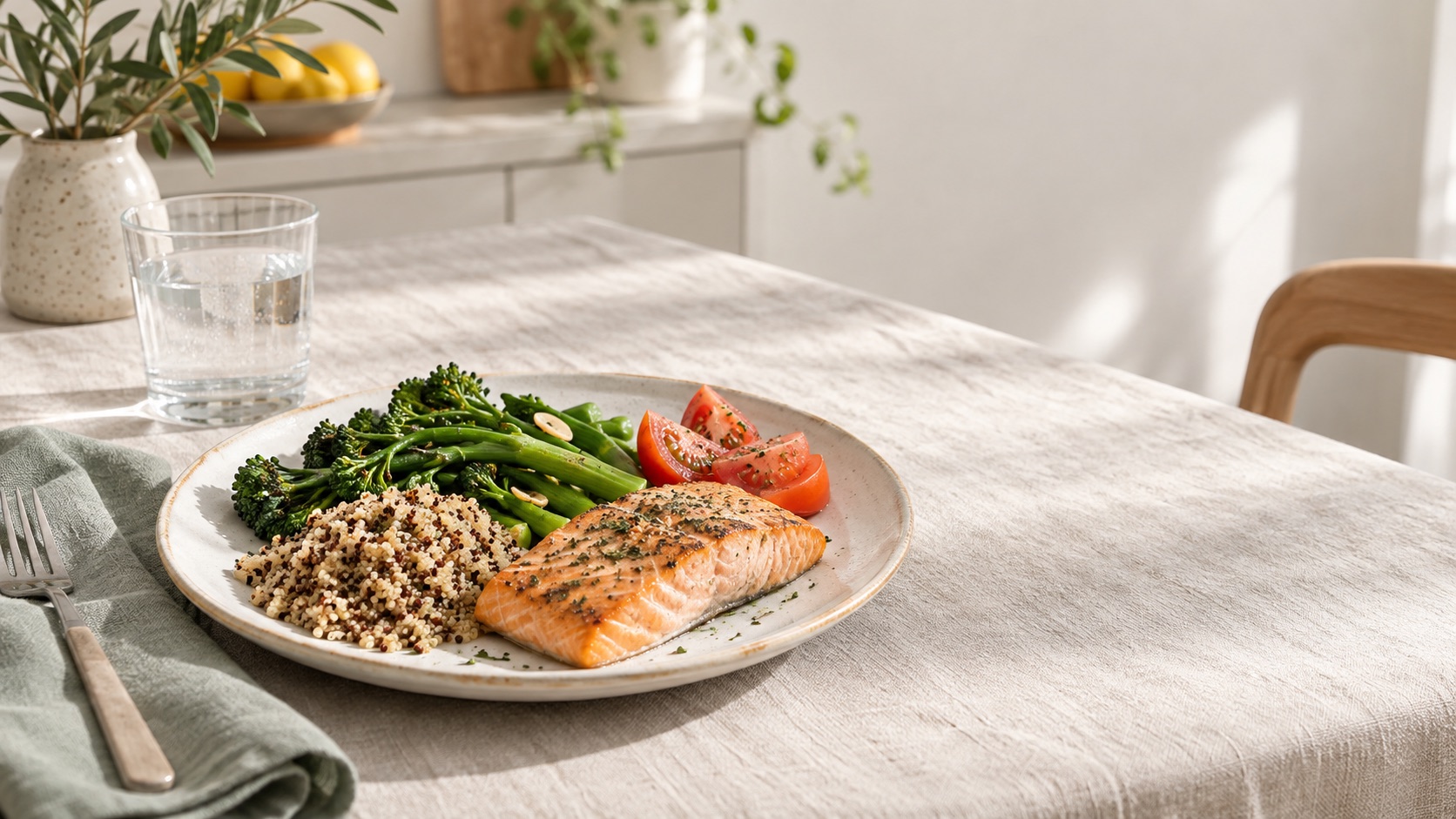
Keep familiar foods in the picture. A lunch could include beans, eggs, tofu, fish or chicken; vegetables or fruit; and rice, potatoes or whole-grain bread. Adjust amounts to your needs and appetite. These are meal ideas, not a prescribed weight-loss menu or a reason to exclude carbohydrates.
Nutritious foods still provide energy, so it is possible to maintain weight while eating well. Review portions with curiosity rather than declaring nuts, olive oil or bread a problem. If you need a broader starting point, see the guide to building balanced meals you can repeat.
Look at movement across the day
A workout is one part of your activity. If daily movement has dropped, consider a short walk, a movement break during work or an active errand that fits your ability. Start from what is comfortable and build gradually.
NIDDK's adult activity guidance includes aerobic activity and muscle-strengthening exercise, with a gradual start for people who are inactive. Strength activity can help maintain muscle during weight loss; it is not a promise that your next weigh-in will be lower.
If a meal is an easy cue for getting outside, the guide to walking after eating offers a simple starting point. There is no need to turn every walk into compensation for food.

Keep strength and recovery in the plan
Strength work can use weights, resistance bands or suitable body-weight exercises. If it is new to you, ask a qualified instructor or physiotherapist to help you find appropriate movements. Injury, pain or a health condition may change what is suitable.
Also ask whether the plan leaves room for rest. If you are exhausted, adding more sessions may be less useful than reviewing your workload, eating and recovery. A demanding week is not the moment to set a rule you cannot reasonably maintain.

Give yourself something specific to review
“I will prepare lunch on workdays” is easier to assess than “I will try harder.” Choose one change and a practical time to review it. For example, you might revisit the routine after two weeks to see whether lunch preparation is manageable and evening hunger feels different. That is a habit check, not a deadline for breaking a plateau.
Record what you can learn: Did the change fit your schedule? Did you feel adequately fed? Was movement comfortable? If it did not fit, adjust the plan instead of treating the attempt as a failure.
When maintenance or personal support makes sense
Further weight loss is not always the right next goal. Maintaining a change you have already made, eating adequately and improving fitness can be worthwhile outcomes. Your target should reflect health and circumstances, not just a number chosen at the beginning.
A registered dietitian or clinician can help review whether further loss is appropriate, how your needs may have changed and what support would help. Seek that advice if the trend remains flat and you are unsure what to change, or if the plan involves persistent hunger, fatigue, dizziness, increasingly rigid rules or distress.
Medicines should be part of that discussion when relevant. Do not stop or adjust a prescription to move the scale. For the separate question of food choices during treatment, see nutrition while taking a prescribed GLP-1 medication; medication decisions belong with your prescriber.
An ordinary plateau is different from rapid, unexplained weight gain. MedlinePlus advises medical assessment for unexplained gain and associated symptoms. Rapid gain with swelling or shortness of breath needs prompt medical attention. A plateau alone does not establish a thyroid problem or another diagnosis.
Your next step: check that the measurements are comparable, identify what has changed and choose one adjustment you can live with. If nothing obvious emerges, take that information to a professional rather than making an already difficult plan more restrictive.
Frequently asked questions
How long does a weight loss plateau last?
There is no single timetable. A few unchanged readings may reflect short-term variation, while a longer flat trend may call for a review of your plan and goals. Compare measurements taken under similar conditions. Seek individual advice if the trend persists or the plan is becoming difficult to sustain.
Should I cut more calories when my weight loss stalls?
Not automatically. First review the weight trend, meals, hunger, daily movement and health changes. If you are already eating very little, feel unwell or are becoming preoccupied with food, seek qualified support rather than making the plan stricter. A personal calorie target needs personal context.
Why am I exercising but not losing weight?
Exercise can improve fitness and strength without an immediate change on the scale. Body weight also reflects fluid, food and other tissues, and eating and activity across the whole day matter. Review the longer trend and your routine rather than assuming that every workout should produce a lower weight.
Can I reach a plateau while eating healthy foods?
Yes. Food quality and energy intake are related but different questions. Nutritious meals can support health while providing enough energy to maintain your current weight. Review portions, drinks, meal regularity and hunger without labeling useful foods as bad or removing whole food groups.
Will eating more or taking a diet break restart my metabolism?
There is no guaranteed metabolic restart. A period focused on maintaining weight may make a difficult plan more manageable, but it does not promise renewed weight loss. If you are exhausted, persistently hungry or unsure whether to continue losing weight, discuss your next step with a qualified professional.
Sources
- Hall et al., The Lancet: Quantification of the effect of energy imbalance on bodyweight
- Polidori et al., Obesity: How Strongly Does Appetite Counter Weight Loss?
- Bhutani et al., Physiological Reports: Composition of two-week change in body weight under unrestricted free-living conditions
- Kanellakis et al., American Journal of Human Biology: Changes in body weight and body composition during the menstrual cycle
- NHS England: How to record your weight
- CDC: Steps for Losing Weight
- NIDDK: Health Tips for Adults
- MedlinePlus: Unintentional weight gain