What to Eat on GLP-1 Medication: Protein, Fiber and Easy Meals
What should you eat while taking a GLP-1 medication? Start with smaller meals you can comfortably finish, include a protein food regularly, add fruit, vegetables and fiber-rich carbohydrates as tolerated, and drink fluids through the day. There is no special product or rigid “GLP-1 diet” that everyone needs. Your medication can make you feel full sooner, but your need for nourishing food remains.
This guide focuses on the practical food question, whether you take a GLP-1 receptor agonist such as semaglutide or a related dual GIP/GLP-1 medicine such as tirzepatide. It does not tell you which medicine or dose to take. Follow the instructions for your particular prescription and ask your care team for advice tailored to diabetes, kidney disease, pregnancy, an eating-disorder history or other health needs.
Four nutrition priorities while taking a GLP-1
A 2025 joint advisory from four nutrition and obesity organizations emphasizes personalized, nutrient-dense eating, adequate protein, attention to gastrointestinal symptoms, and movement during treatment. These are practical priorities, not a universal meal plan or a promise of a particular weight outcome.
1. Make room for a protein food
When portions get smaller, it is easy for protein to disappear from a meal. Eggs, fish, poultry, plain Greek yogurt, cottage cheese, tofu, edamame, beans and lentils are all options. Choose one you enjoy and tolerate, then add other foods around it. The NHS food and nutrition guide gives examples of protein foods and explains why muscle matters during weight loss. A clinician or dietitian can set a personal protein target if one is useful; a number copied from social media may be wrong for you, particularly with kidney disease.
2. Add plants and fiber gradually
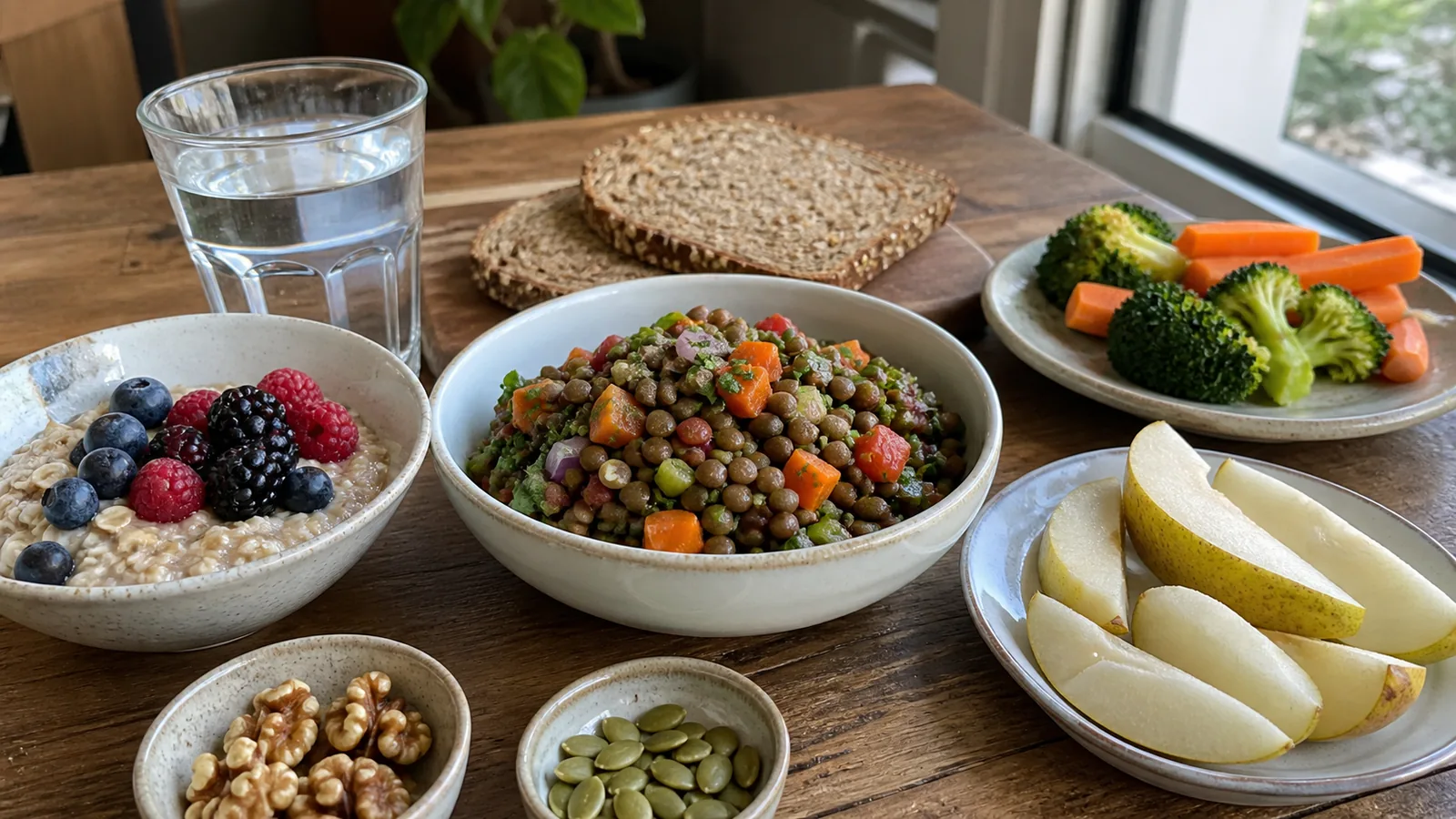
Fruit, cooked vegetables, oats, whole grains and legumes bring fiber and a mix of vitamins and minerals. Smaller appetites can mean fewer of these foods, while constipation is a common concern. Build them back in gradually and notice what feels comfortable. A large raw salad or an abrupt jump to high-fiber supplements can be hard to tolerate when you already feel full or nauseated. For a careful step-by-step approach, see my guide to increasing fiber without bloating.
3. Keep a range of foods, including carbohydrates and fats
Rice, potatoes, oats and whole-grain bread can help make a small meal satisfying. Olive oil, nuts, seeds and avocado add flavor and useful fats. You do not need to ban either group. If a large or very rich meal worsens nausea or heartburn, try a smaller serving or a gentler preparation and discuss persistent symptoms with your care team. More everyday ideas are in my healthy eating tips.
4. Keep fluids in the routine
Have water or another suitable drink within reach and sip regularly, especially if your appetite is low. Vomiting or diarrhea can increase fluid loss. Fluid needs differ with body size, weather, activity and medical conditions; people advised to restrict fluids should follow their clinician's plan. The NHS side-effect guide also explains when dehydration symptoms need medical advice.
A flexible day of meals, not a prescription
Use the examples below as building blocks rather than a calorie target. Portions can be smaller or larger, and an optional snack can become part of a meal. If you are frequently unable to eat enough, ask for an individualized nutrition review instead of continuing to shrink portions.
On a phone, swipe across the table to see the swaps.
| Eating moment | One simple option | Easy swap |
|---|---|---|
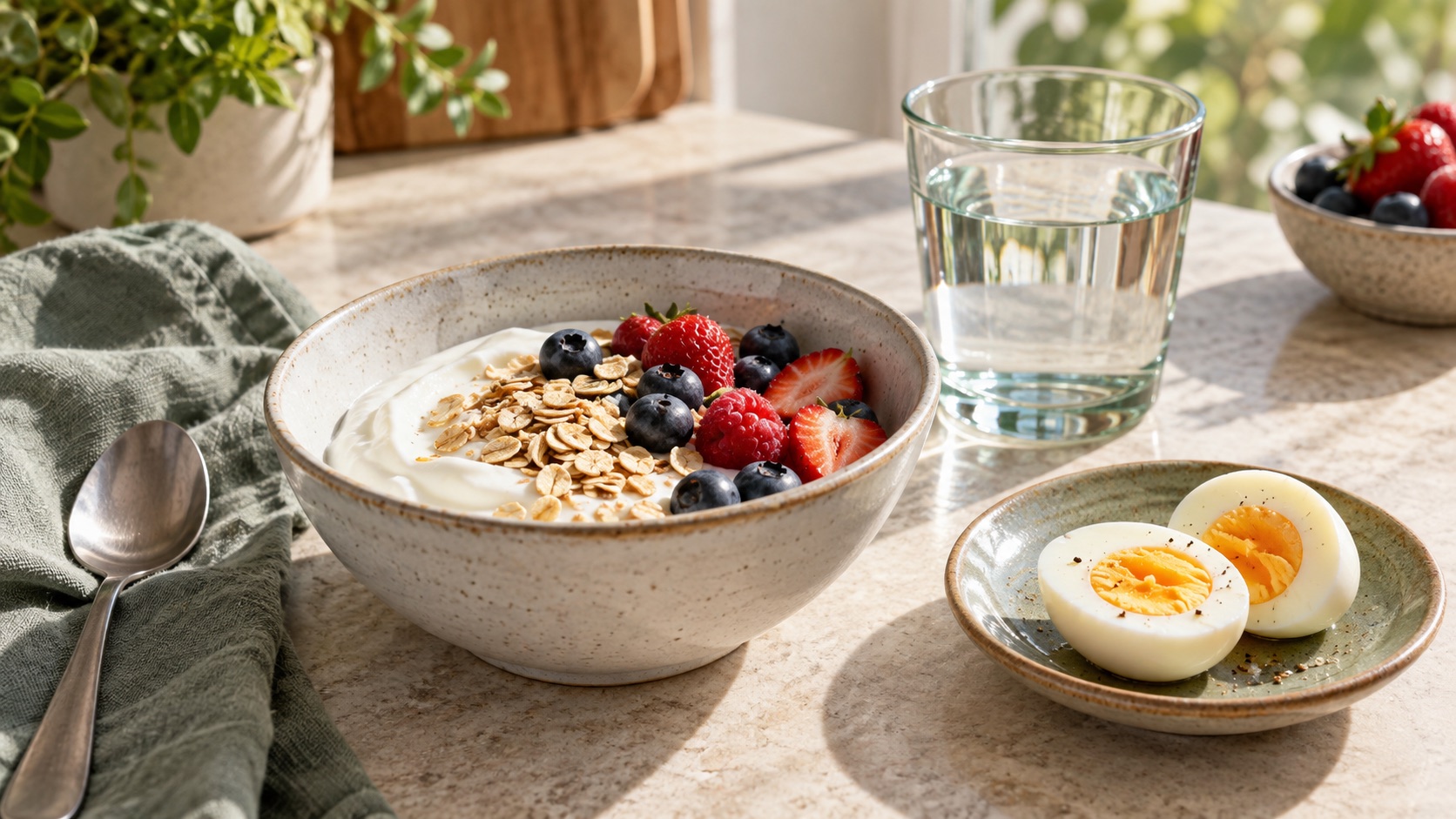
| Breakfast | Plain Greek yogurt with berries and a spoonful of oats | Soft tofu with fruit, or an egg with toast |
| Lunch | A small bowl of chicken or tofu, rice and cooked vegetables | Lentil soup with yogurt or a piece of cheese |
| Optional snack | Fruit with cottage cheese | Edamame, or crackers with hummus |
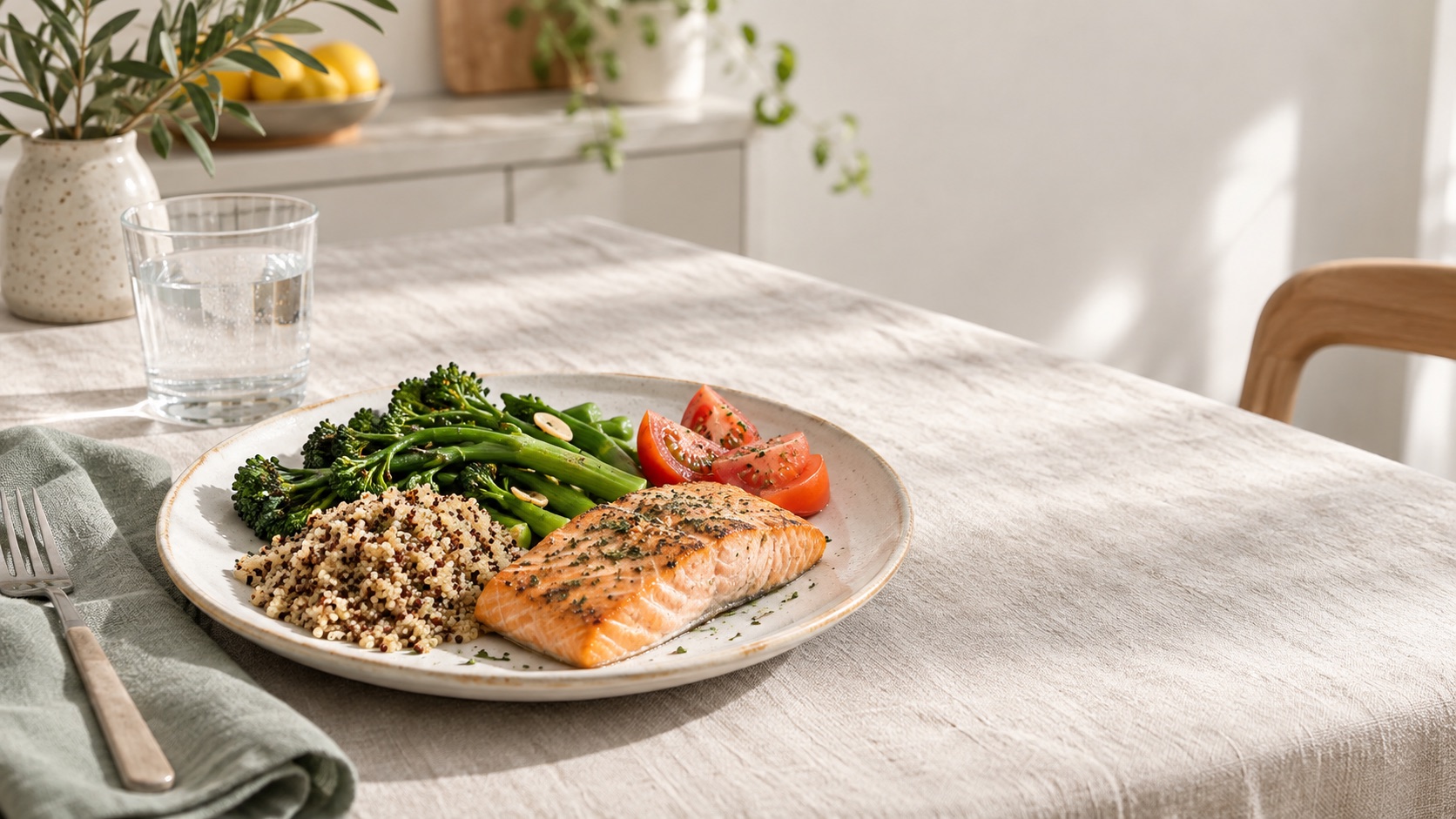
| Dinner | Salmon, a small serving of quinoa and cooked greens | Beans and a baked potato with soft vegetables |
These meals are examples, not a measured GLP-1 meal plan. People with diabetes who use insulin or another medicine that can cause low blood sugar may need a different schedule. Your prescribed medicine may also have its own instructions about when to eat; check the patient leaflet and care team rather than using a generic rule.
What if you feel too full or nauseated?
GLP-1 medicines commonly cause digestive symptoms, especially during treatment changes. NIH MedlinePlus drug information for semaglutide lists nausea, vomiting, diarrhea and constipation among possible side effects. Your experience may differ, and another medicine may have different instructions or warnings.
- Try smaller, more frequent eating opportunities. A few bites of egg and toast, plain yogurt, tofu, rice or soup can be easier than a large plate. Eat slowly and stop at comfortable fullness.
- Choose gentler textures for a short time. Cooked vegetables, porridge, soft fruit and plain starches may feel better than a large raw salad when nausea is active.
- Keep drinking. Small, regular sips may be easier than a large drink at once. Ask for advice if you cannot keep fluids down.
- Notice triggers without creating a forbidden-food list. Very large, fatty or strongly scented meals bother some people; others tolerate them. Aim to return to variety as symptoms settle.
The NHS patient guide offers similar food ideas and advises contacting a healthcare team if symptoms worsen. Do not change or stop prescribed medicine based on an article; discuss side effects with the prescriber.
Why protein and strength activity belong together
Weight loss can include a loss of lean tissue as well as fat. The joint advisory recommends paying attention to adequate protein and resistance exercise, while acknowledging that the right protein amount is individual. You do not need to turn every meal into a protein challenge. A repeatable choice is to include a protein food at meals and ask for help if you are eating very little.
For adults who can exercise safely, the CDC recommends muscle-strengthening activity on at least two days a week. This can be adapted to ability and medical circumstances. Gentle walking can support daily movement too; my post-meal walking guide explains what short walks can and cannot do.
When to get personal advice
Food advice should fit the person and the prescription. Speak with your prescriber or a qualified dietitian if you have diabetes and take insulin or sulfonylureas, chronic kidney disease, a history of disordered eating, persistent nausea, or concern that you are not meeting nutrition needs. Pregnancy and breastfeeding need medication-specific medical advice. If a medicine causes new symptoms, your care team can decide whether treatment needs adjusting.
Seek prompt medical assessment for severe or persistent abdominal pain, repeated vomiting, inability to keep fluids down, lightheadedness or signs of dehydration. MedlinePlus describes serious symptoms, and the NHS advises contacting a clinician when vomiting or dehydration symptoms occur. A food list cannot safely manage those problems.
For the broader science of weight change rather than eating with a medication, see the existing weight-loss science article. This guide addresses the separate question of practical food choices during GLP-1 treatment.
Frequently asked questions
Is there a special diet for GLP-1 medication?
No single diet is required. Aim for enough varied food and fluid in portions you tolerate, and adjust the plan to your condition and prescription.
What if I have little appetite?
Try a manageable meal or snack with a protein food and something else you tolerate. If low appetite makes it hard to eat enough day after day, contact your care team.
Do I need extra protein?
Protein helps support muscle during weight loss, particularly with strength activity. The amount is personal. Ask a dietitian if you need a target or have kidney disease.
Should I avoid fat or fiber?
No. These are normal parts of a balanced diet. If symptoms are active, try smaller portions, gentler textures and gradual fiber increases rather than permanent exclusions.
What if nausea or vomiting does not improve?
Speak with your prescriber. If you cannot keep fluids down, feel lightheaded or develop severe abdominal pain, seek prompt medical assessment.
Takeaway
Eating well on a GLP-1 medication means finding a small, flexible pattern that still brings protein, produce, fiber-rich foods and fluid into your day. Use the sample meals as ideas, not rules. If side effects or a very low appetite make that difficult, your care team can help you adjust the plan safely.
Sources reviewed
- Mozaffarian et al. (2025): joint advisory on nutritional priorities during GLP-1 therapy.
- Guy's and St Thomas' NHS: food and nutrition while taking weight-loss medicines.
- Guy's and St Thomas' NHS: managing side effects with diet.
- NIH MedlinePlus: semaglutide injection drug information.
- CDC: adult physical activity and muscle-strengthening guidance.