What’s in Season in August? A Practical Guide to Fruit and Vegetables
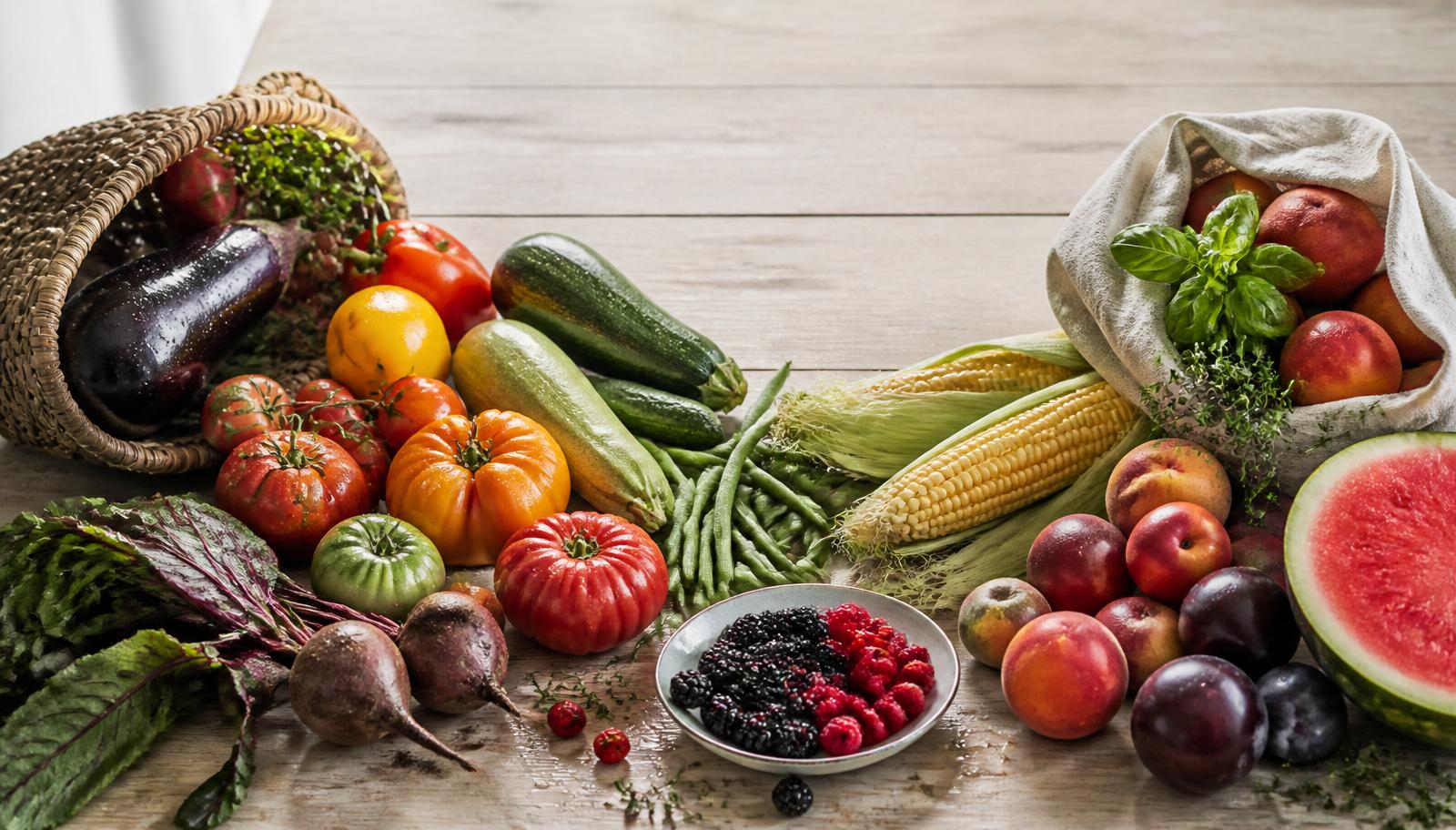
August is one of the most generous months of the year for seasonal fruit and vegetables. Tomatoes are full of flavour, courgettes seem to appear everywhere, berries are still available, and peaches, plums and other stone fruits bring natural sweetness to simple summer meals.
For me, seasonal eating is not about following strict rules or buying only locally grown food. It is a practical way to bring more variety into the kitchen, discover ingredients when they are at their best and make everyday meal planning feel a little easier.
In this guide, you will find a practical overview of what is in season in August across the UK and temperate parts of Europe, along with simple ideas for choosing, storing and using these ingredients.
What does “in season” mean?
A fruit or vegetable is considered seasonal when it is naturally harvested in a particular region at that time of year. However, seasonality is not exactly the same everywhere.
Northern France, southern France, the UK, Ireland and Mediterranean countries all have different growing conditions. Weather also changes from one year to another, so harvest dates may begin earlier or later. This means that a seasonal calendar should be used as a flexible guide rather than an absolute list.
When shopping, look at:
- the country of origin;
- local market displays;
- supermarket labels;
- what appears abundant and reasonably priced;
- which ingredients look fresh and full of flavour.
You do not need to eat only seasonal produce. Frozen vegetables, canned beans, stored produce and imported ingredients can all be useful parts of a practical kitchen.
What vegetables are in season in August?
August offers a particularly wide variety of vegetables. It is an ideal time for salads, traybakes, vegetable bowls, soups, pasta dishes and simple meals cooked outdoors.
Tomatoes
August is often one of the best times to enjoy tomatoes. You may find small cherry tomatoes, elongated plum tomatoes, large slicing tomatoes and colourful heritage varieties.
Use them in:
- tomato and white bean salad;
- tomato orzo;
- vegetable pasta sauce;
- bruschetta;
- roasted tomato soup;
- omelettes;
- grain bowls;
- tomato and mozzarella salad.
Choose tomatoes that feel heavy for their size and have a pleasant natural aroma. Slightly soft tomatoes are often perfect for sauces, roasting and soups. Store ripe tomatoes at room temperature when possible. If they become too soft, move them to the refrigerator and use them soon.
Courgettes
Courgettes, also called zucchini, are abundant during late summer. Their mild flavour makes them useful in both simple family meals and lighter summer recipes.
Try them:
- roasted with herbs;
- grated into fritters;
- added to pasta;
- cooked in a vegetable curry;
- sliced into an omelette;
- stuffed and baked;
- blended into soup;
- added to savoury muffins.
Smaller and medium-sized courgettes are usually more tender. Very large courgettes can still be used, but they may contain more seeds and work better in soups, sauces or baked dishes.
Aubergines
Aubergines are at their best when their skin looks smooth and glossy and the vegetable feels firm but not completely hard. They absorb flavours well and work especially well with tomatoes, herbs, chickpeas, lentils, yoghurt, tahini and olive oil.
Use aubergines in:
- roasted vegetable trays;
- tomato and aubergine pasta;
- vegetable curry;
- warm grain bowls;
- dips;
- stuffed aubergines;
- Mediterranean-style salads.
Aubergine does not need to be covered in oil. Roasting, grilling or cooking it slowly with tomatoes can produce a soft texture with a more moderate amount of added fat.
Peppers
Red, yellow, orange and green peppers add colour, sweetness and crunch to summer meals. They can be eaten raw, roasted, grilled, stuffed or cooked into sauces.
Add them to:
- salads;
- fajita-style bowls;
- pasta;
- shakshuka;
- omelettes;
- vegetable kebabs;
- traybakes;
- soups.
Roasted peppers can also be stored in the refrigerator for a few days and added to quick lunches.
Cucumbers
Cucumbers are refreshing, versatile and particularly useful during warmer weather.
Try them with:
- yoghurt and herbs;
- tomatoes and feta;
- lentils;
- tuna;
- chickpeas;
- cold noodles;
- sandwiches;
- chilled soups.
A firm cucumber with smooth skin is usually a good choice. Once cut, keep it covered in the refrigerator and use it within a few days.
Sweetcorn
Fresh sweetcorn brings natural sweetness and texture to August meals. It can be boiled, grilled, roasted or cut from the cob and added to salads, soups, tacos, rice bowls, quinoa dishes, vegetable fritters and salsa. Corn pairs especially well with tomatoes, black beans, lime, herbs, peppers and avocado.
Green beans and runner beans
Green beans and runner beans work well as simple side dishes or as part of more complete meals.
Serve them:
- lightly cooked with olive oil and lemon;
- with potatoes and eggs;
- in a tomato-based stew;
- in grain salads;
- with lentils or white beans;
- alongside fish or chicken.
Avoid overcooking them if you prefer a firmer texture.
Beetroot
Beetroot brings an earthy sweetness to salads, bowls and roasted vegetable dishes. It can be roasted, boiled or grated raw.
Combine it with lentils, goat’s cheese or feta, walnuts, apples, yoghurt, leafy greens, oranges and whole grains. The leaves of fresh beetroot may also be cooked in a similar way to chard or spinach.
Broccoli and cauliflower
Although broccoli and cauliflower may not feel like obvious summer ingredients, they can still be available seasonally in August in parts of the UK and Europe. For warmer days, try serving them roasted and cooled in a salad, with a yoghurt or tahini dressing, in a grain bowl, alongside beans or lentils, or in a vegetable frittata.
Download the Free August Seasonal Foods Guide
Keep a practical list of August fruits and vegetables on your phone and use it while planning meals or shopping.
Get the Free August GuideWhat fruits are in season in August?
August fruit varies considerably by region, but late summer is usually associated with berries, stone fruits and melons.
Blackberries and raspberries
Berries are easy to use in breakfasts, snacks and desserts. Add them to porridge, yoghurt, overnight oats, pancakes, chia pudding, fruit salads or simple oat crumbles.
Berries are delicate and can spoil quickly. Keep them refrigerated and wash them shortly before eating rather than immediately after buying. Soft berries that are no longer perfect for serving fresh can be cooked into a compote or frozen for smoothies and porridge.
Peaches and nectarines
Peaches and nectarines bring sweetness and fragrance to late-summer meals. Eat them fresh or use them in yoghurt bowls, salads with mozzarella or feta, porridge, toast with ricotta, baked desserts and fruit compote. Allow firm fruit to ripen at room temperature. Once ripe, it can be refrigerated briefly to slow further softening.
Plums and damsons
Plums can range from sweet and juicy to more tart varieties. They work well eaten fresh, baked with oats, cooked into compote, added to yoghurt, served in salads or roasted alongside savoury ingredients. Very ripe plums are particularly useful for sauces, baking or homemade compote.
Melons
Watermelon and other melons are refreshing during warm weather and require almost no preparation. Serve melon on its own, with yoghurt, in fruit salads, with cucumber and herbs, with feta, or blended into a chilled drink. Remember that fruit can support hydration, but it does not replace drinking water throughout the day.
Figs
Fresh figs may be available in warmer parts of Europe during late summer. They pair well with yoghurt, oats, nuts, soft cheese, salads and toast. Fresh figs are delicate and are best eaten soon after buying.
A simple August shopping list
You do not need to buy every seasonal ingredient at once. Choose a manageable selection that can be used across several meals.
Vegetables
- tomatoes;
- courgettes;
- peppers;
- cucumbers;
- aubergines;
- sweetcorn;
- green beans;
- salad leaves.
Fruits
- blackberries or raspberries;
- peaches or nectarines;
- plums;
- melon.
Useful supporting ingredients
- eggs;
- beans or lentils;
- fish, chicken or tofu;
- wholegrain bread;
- potatoes, rice, pasta or another grain;
- olive or rapeseed oil;
- nuts and seeds;
- fresh herbs.
This type of list creates flexibility without requiring a rigid meal plan.
How to turn August produce into balanced meals
Seasonal vegetables can form the starting point of a meal, but they do not always make a complete meal on their own.
A practical meal can include:
- Vegetables or fruit for variety, flavour and fibre.
- A protein source, such as beans, lentils, eggs, fish, poultry, yoghurt, tofu or cheese.
- A carbohydrate source, such as potatoes, bread, rice, pasta or another grain.
- A source of fat or flavour, such as olive oil, nuts, seeds, avocado, pesto or a yoghurt-based dressing.
You do not need to achieve a perfect balance in every individual meal. What matters more is the overall pattern across the day and week.
Simple August meal ideas
- Breakfast: Greek yoghurt with peaches, berries, oats and nuts.
- Quick lunch: Tomato, cucumber and white bean salad with wholegrain bread.
- Warm lunch: Courgette fritters with yoghurt, herbs and a simple tomato salad.
- Family dinner: Roasted aubergines, courgettes and peppers served with chicken, fish, tofu or chickpeas and a grain of your choice.
- Meat-free dinner: Tomato and lentil pasta with roasted vegetables.
- Light evening meal: An omelette with courgettes, peppers and herbs, served with potatoes or bread and a salad.
- Dessert: Warm baked plums with oats and plain yoghurt.
How to reduce food waste in August
August produce can ripen quickly, especially during warm weather. A small amount of planning can prevent fresh ingredients from being forgotten.
Use the most delicate foods first
Eat berries, ripe peaches, figs and salad leaves early in the week. Tomatoes, courgettes, peppers, aubergines and root vegetables usually give you more time.
Cook one flexible vegetable base
Roast a tray of courgettes, peppers, tomatoes and aubergines. Use the vegetables across several meals: with eggs, in pasta, in a grain bowl, with beans, alongside fish or chicken, or blended into a soup or sauce.
Freeze what you cannot use
Berries, chopped herbs, cooked tomato sauce and some prepared vegetable dishes can be frozen for later.
Turn overripe fruit into something useful
Soft peaches, plums and berries can become compote, baked fruit, smoothie ingredients, porridge toppings or yoghurt toppings.
Do seasonal foods have to be local?
Seasonal and local are related ideas, but they are not identical. A product may be seasonal somewhere in Europe without being grown close to where you live. A locally grown product may also have been produced in a heated greenhouse or stored after harvest.
Instead of trying to follow a perfect system, use the information available to you. Check where the food was grown, consider what is abundant locally and choose a balance that works for your budget, location and household. Seasonal eating should make everyday cooking easier, not create another set of food rules. For a broader overview, see my complete seasonal foods guide.
My practical approach to seasonal eating
I prefer to use seasonal ingredients as inspiration. At the beginning of the week, I choose three or four seasonal foods that look good and decide how they can appear in several meals.
For example:
- tomatoes for salad, pasta and eggs;
- courgettes for fritters, roasting and soup;
- berries for breakfast and dessert;
- peaches for snacks, yoghurt and salads.
This approach gives meals variety without requiring a completely new recipe every day. If you enjoy this way of cooking, you may also like more articles on my nutrition blog.
Frequently asked questions
What fruit is in season in August?
Typical August fruits in the UK and temperate Europe may include blackberries, raspberries, plums, damsons, peaches, nectarines, melons, cherries and figs. Availability varies according to location and climate.
What vegetables are in season in August?
Common August vegetables include tomatoes, courgettes, aubergines, cucumbers, peppers, sweetcorn, green beans, beetroot, broccoli, cauliflower, lettuce and potatoes.
Is seasonal produce always cheaper?
Not always. Prices depend on harvest size, weather, location, transport, retailer and demand. However, ingredients that are abundant during their main harvest period can sometimes offer better value.
Do frozen vegetables count as healthy food?
Frozen vegetables can be a convenient and useful choice, particularly when fresh produce is unavailable, expensive or likely to be wasted. A practical diet can include a mixture of fresh, frozen and canned foods.
Do I need to eat only seasonal fruit and vegetables?
No. Seasonal eating is a flexible tool, not a strict dietary rule. Imported produce, frozen vegetables, canned foods and stored ingredients can all be included in balanced everyday meals.
Sources and further reading
This article was prepared using seasonal produce information from the European Food Information Council (EUFIC), the European Commission’s fruit and vegetable resources and the British Dietetic Association. General balanced-eating information was checked against the NHS Eatwell Guide. The exact availability of individual products can vary by climate, country, local harvest and weather conditions.